
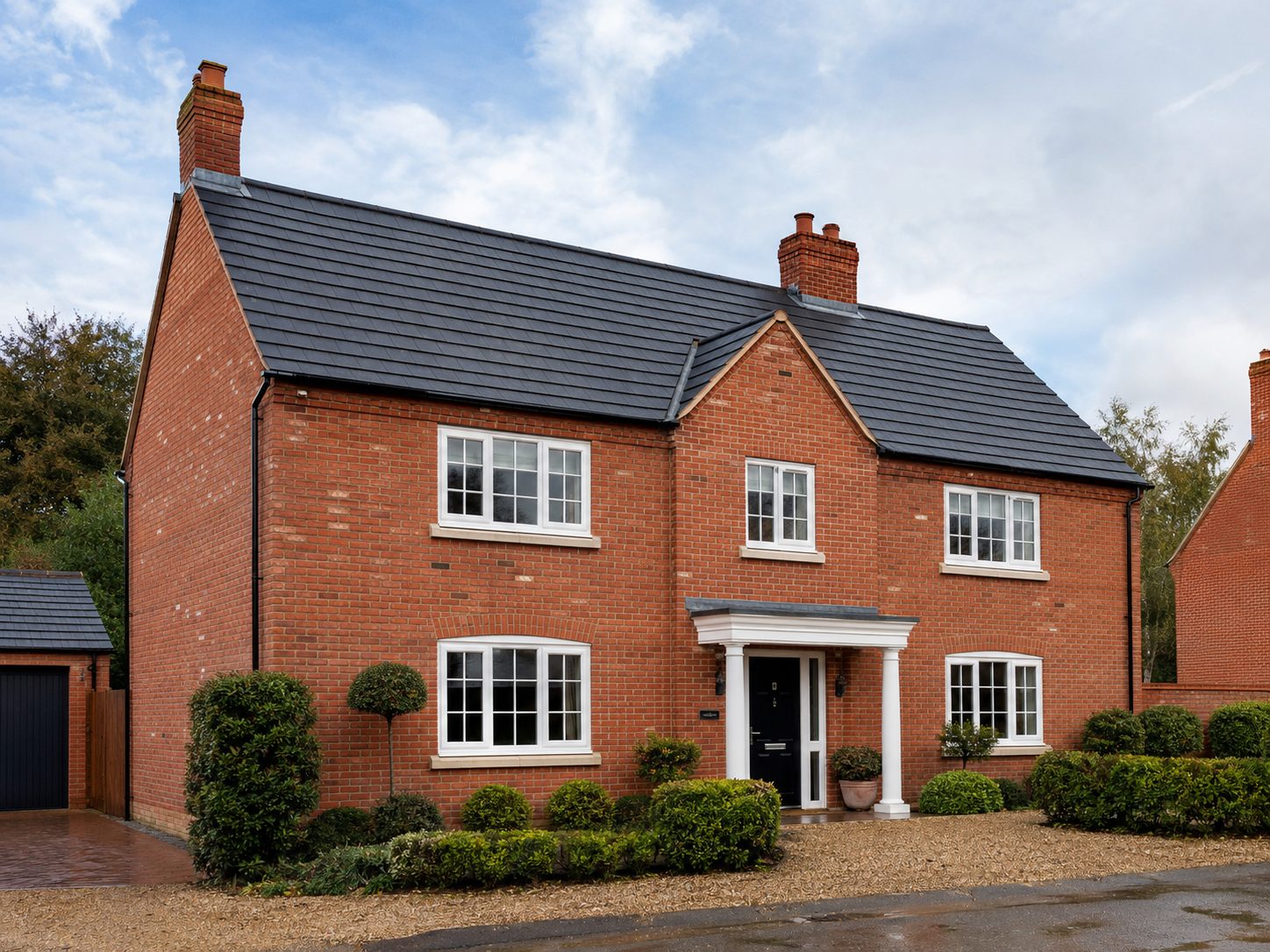
A re-roof is the most disruptive thing most people have done to their house without moving out. Knowing the sequence takes most of the stress out of it: you can see progress, you know when the noisy days are, and you know what to expect when the covering comes off and the house is temporarily open to the weather.
Need this sorted?
Roof Replacement & New Roofs from Larke's Roofs.
Before anything starts
We survey the roof inside and out, agree the covering and the details, and issue a written quotation with the scope, the provisional allowances for timber, and the access arrangements. If a pavement licence or a neighbour's permission for scaffold is needed, that is sorted before a date is booked, not on the morning.
You will be told what needs moving, where the skip goes and what happens if the weather turns.
Scaffold and strip
Scaffolding goes up first, with protection to anything below, conservatories, paths, planting. The strip is the noisy, dusty day. Tiles or slates come off and are sorted for reuse where the specification allows, old battens and underlay are removed, and everything goes into the skip.
We only strip what can be made watertight the same day. On a large roof that means working in sections rather than opening the whole thing up and hoping.
Roof Replacement & New Roofs
- Full strip and re-roof
- Tile, slate and pantile coverings
- New battens, membrane and ventilation
The part you never see again
With the roof open, the timbers are visible and any provisional timber work is agreed with you before it is done. Then the roof is rebuilt from the deck up.
- Rafter feet, wall plates and battens repaired or renewed as needed
- Breather membrane laid with correct laps and eaves detailing
- New treated battens set out to the correct gauge for the covering
- Eaves ventilation and rafter trays where the design requires them
- New lead flashings, valleys and abutment details
Covering, details and finishing
The covering goes on with the fixing specification the pitch and exposure require, followed by ridge, hips and verges. Then the details that decide whether it lasts: soakers, flashings, valley cut-ins, gutter and eaves finishing.
At the end we walk the job with you, show you photographs of what was done under the covering, clear the site and take the scaffold down. Guarantee and paperwork follow in writing.
Want a professional to handle it?
Common questions
How long does a re-roof take?
It depends on size, complexity and weather. We give an expected duration with the quotation and tell you if weather is going to push it, rather than leaving you guessing.
Do I need to move out?
Almost never. It is noisy during the strip and there will be dust in the loft, but the house stays usable throughout.
What happens if it rains mid-job?
We work in sections and sheet up. The roof is left weathertight at the end of every day, that is a planning matter, not an emergency measure.
Will you show me what was underneath?
Yes. We photograph the timbers, membrane and details as we go, because once the covering is on you have no other way of knowing what was done.
Related services
Covering Norwich and Norfolk.