
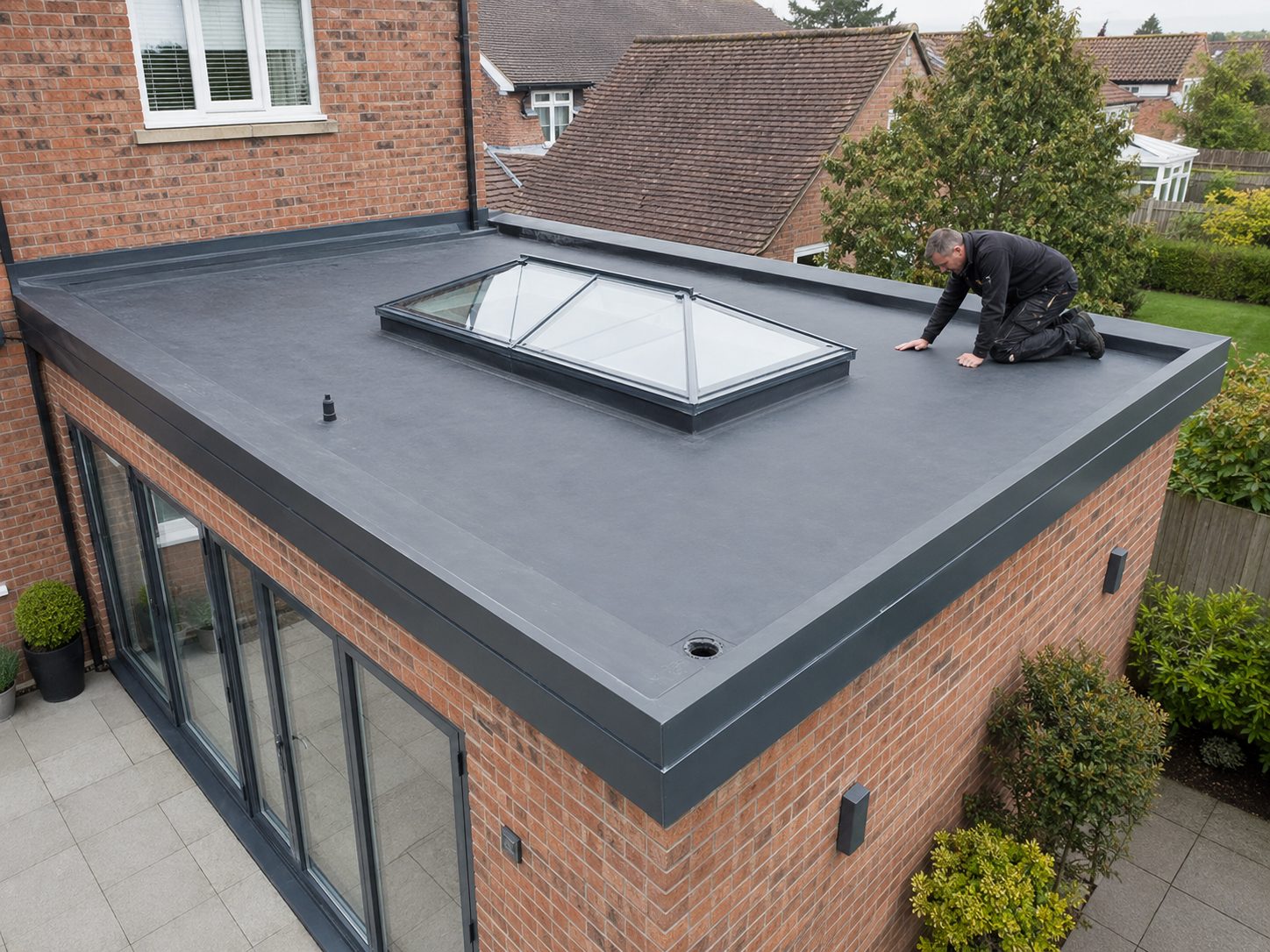
Warm roof and cold roof describe where the insulation sits, not how warm the room feels. In a cold roof the insulation is below or between the joists and the structure above it stays cold and ventilated. In a warm roof the insulation sits above the structure, keeping the timbers on the warm side. The choice matters most when a flat roof is being replaced, because getting it wrong can trap moisture in the deck.
Need this sorted?
Flat Roofing & EPDM from Larke's Roofs.
How a cold roof works
In a cold flat roof, insulation is fitted between the joists, below the deck. Above the insulation there must be a ventilated gap so that any moisture reaching the cold timber can be carried away by moving air, with vents at opposite edges of the roof. A vapour control layer on the warm side, usually just above the ceiling, limits how much moisture rises into the void.
Cold flat roofs are common on older extensions and garages. They can work when the ventilation is continuous, but on many small roofs it is hard to get air moving across every joist bay, especially where the roof meets a wall. Blocked or missing ventilation is a frequent cause of rotten decks that look like leaks.
How a warm roof works
In a warm flat roof, rigid insulation boards are laid on top of the deck, with a vapour control layer beneath them and the waterproof covering on top. The joists and deck stay at roughly room temperature, so moisture from the house has no cold surface to condense on inside the structure. No ventilated void is needed.
Because the insulation sits above the deck, a warm roof raises the finished roof level. That affects edge trims, door thresholds, the joint with the house wall and any upstands, which all need allowing for. It is the build-up most often recommended when a flat roof is being replaced and insulated, and it suits EPDM rubber, GRP fibreglass and high-performance felt coverings.
Flat Roofing & EPDM
- EPDM rubber roofs
- GRP fibreglass roofs
- Torch-on felt systems
Warm and cold pitched roofs
On a pitched roof the terms work the same way. A cold roof has insulation across the ceiling joists, leaving a cold, ventilated loft above. A warm pitched roof has insulation at rafter level, often when the loft becomes a room, so the roof void is inside the heated envelope. Our roof insulation guide covers lofts and rooms in the roof in more detail, including the ventilation mistakes to avoid.
Comparing the two
Neither is right for every roof. The comparison usually comes down to these points:
- Condensation risk: a warm roof keeps the structure warm; a cold roof relies on reliable ventilation
- Roof height: a warm roof adds thickness on top; a cold roof keeps the existing level
- Disruption: a warm roof is fitted from above when the covering is renewed; a cold roof may mean work from inside
- Existing structure: deck condition, joist depth and edge details all affect which build-up fits
Choosing for your roof
The best moment to decide is when the covering is coming off anyway. Ask the roofer which build-up they propose, how thick the insulation will be, where the vapour control layer goes and how the raised level will be finished at walls, doors and trims. Building regulations can apply when a roof is renewed or insulated, so the proposal should account for that.
If you are only repairing a covering, the existing build-up usually stays. Converting a cold flat roof to a warm one is normally part of a full replacement, where the deck can be checked and renewed if needed before the insulation goes on.
Want a professional to handle it?
Common questions
Is a warm roof better than a cold roof?
For most flat roof replacements a warm roof is preferred because it keeps the structure warm and avoids relying on ventilation. The existing structure, height limits and details decide what suits your roof.
Does a warm flat roof raise the roof height?
Yes. The insulation sits on top of the deck, so the finished level rises. Edge trims, door thresholds and the wall joint need allowing for in the design.
Can I convert a cold roof to a warm roof?
Usually as part of replacing the covering. The old covering comes off, the deck is checked, and the vapour control layer, insulation and new covering go on top.
What affects the cost of a warm roof?
Roof size, insulation thickness, the covering chosen, deck repairs and the work needed at edges, walls and outlets. A written quote should set out the full build-up.
Related services
Covering Norwich and Norfolk.