
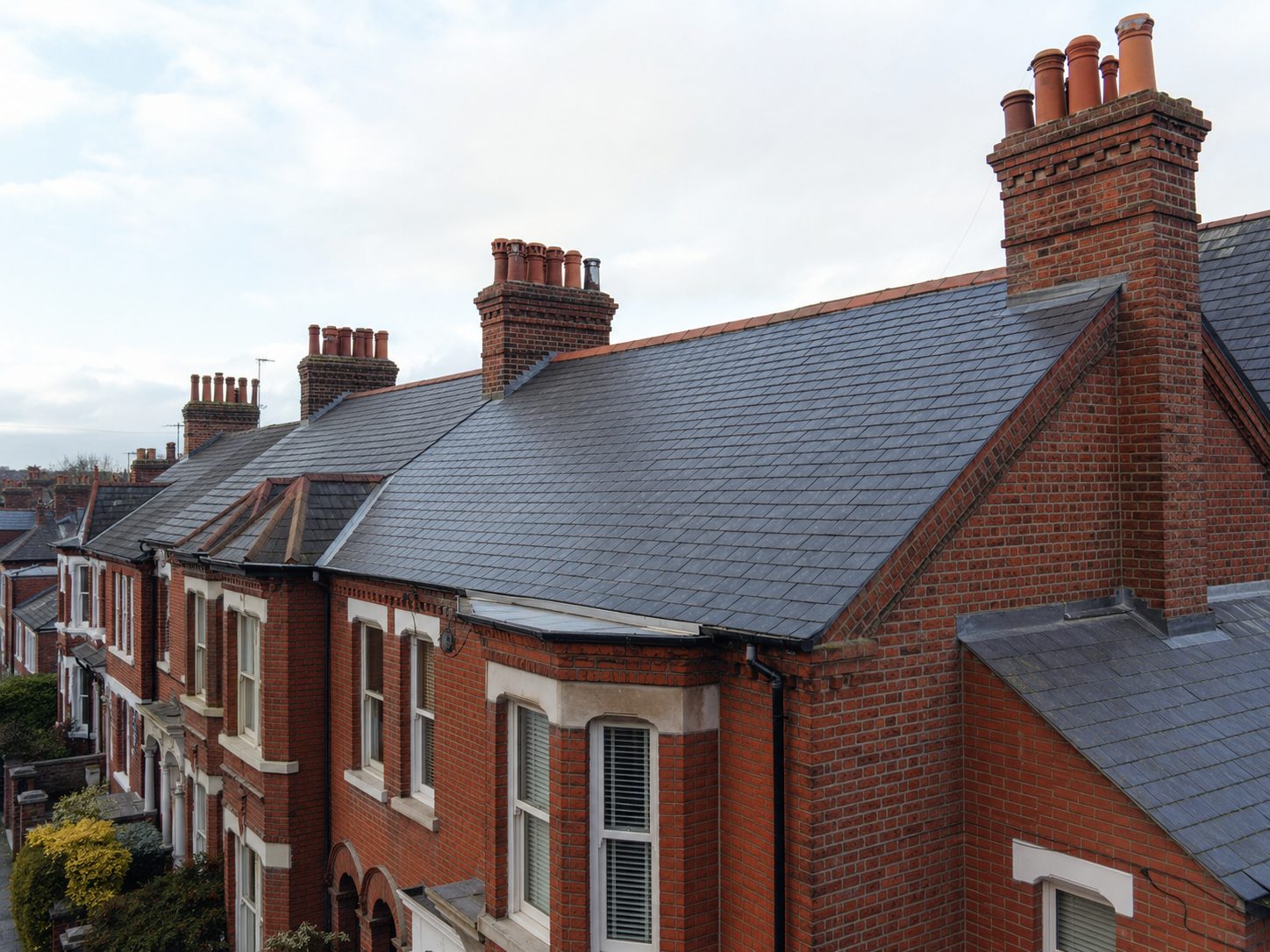
Norfolk has an unusually rich stock of old buildings, from flint and brick cottages and Georgian townhouses to farm ranges and estate buildings. Their roofs were built with different materials, different tolerances and a very different attitude to moisture than a modern house, and the commonest way to damage one is to repair it as though it were new. This guide covers what changes when a roof is historic, what consent you may need, and what to look for in whoever you ask to do the work.
Need this sorted?
Roof Replacement & New Roofs from Larke's Roofs.
Consent: what you need before anyone starts
On a listed building, like for like repair using matching materials is generally acceptable, but anything that changes the appearance, the material or the detailing usually needs listed building consent. That includes swapping clay pantiles for concrete, changing a natural slate for a fibre cement substitute, or adding rooflights.
In a conservation area, the controls focus on external appearance, particularly from public view. Article 4 directions in some areas remove permitted development rights entirely, so it pays to check before assuming a straightforward recovering is unregulated.
The practical advice is the same either way: speak to the conservation officer at your district council early. They are usually far more helpful before the work than after it, and an agreed specification protects both you and the roofer.
Matching the material, not just the colour
Old roofs read as old because of variation: slight differences in size, texture, colour and how the units sit. A modern machine made replacement can be the right colour and still look wrong, because it is too regular.
Where units are being replaced, salvaging and reusing the sound original covering on the most visible slope, and putting new or reclaimed matching material on the least visible one, is a well established approach that keeps the character where it counts.
Reclaimed clay pantiles are the classic East Anglian case. Sound reclaimed stock is scarce and has to be sorted, so it usually costs more than buying new, and any quote should say clearly whether reclaimed or new is being allowed for.
- Salvage and re-sort the existing covering before ordering anything
- Use the best salvaged units on the elevation seen from the road
- Match size and coursing, not just colour and material
- Agree the specification with the conservation officer in writing
Roof Replacement & New Roofs
- Full strip and re-roof
- Tile, slate and pantile coverings
- New battens, membrane and ventilation
Breathability and why hard repairs fail
Old buildings were built to get wet and to dry out again. Solid walls, lime mortars and porous materials all move moisture continuously. Modern construction works the opposite way, by keeping water out entirely with impermeable barriers.
Apply modern thinking to an old roof and the moisture has nowhere to go. Hard cement mortar on soft brick or clay pushes damp into the units themselves, which then spall. Impermeable underlays in an old, previously well ventilated roof space trap vapour against historic timbers.
The correct approach on historic work is to keep the assembly breathable: lime based mortars, breathable membranes or traditional torching where appropriate, and ventilation that respects how the roof was originally designed to work.
The details that matter on old roofs
Historic roofs have features that modern practice has largely abandoned, and preserving them is often the point of the exercise.
- Original ridge and hip tiles, bedded in lime rather than replaced with modern profiles
- Swept and laced valleys formed in the covering rather than lined with a modern trough
- Traditional lead detailing at chimneys, parapets and abutments
- Original timber structure retained and spliced rather than replaced wholesale
- Historic rainwater goods, often cast iron, repaired rather than swapped for plastic
- Existing eaves and verge lines kept, so the roof does not gain a modern edge
Choosing a roofer for historic work
The questions are different from a standard re-roof. Ask what they intend to do with the existing covering, what mortar mix they will use and why, how they will form the valleys, and whether they have worked with the conservation officer before.
Be wary of a quote that treats an old roof as a strip and replace exercise. On a historic building, the cheapest quote is often the one that has assumed all new materials, modern mortar and a modern membrane, and that is the one most likely to cause a problem with consent and with the fabric.
We work on period and listed properties around Norwich and across Norfolk, and we will always set out clearly in writing what is being retained, what is being replaced and what it is being replaced with.
Want a professional to handle it?
Common questions
Do I need listed building consent just to repair my roof?
Genuine like for like repair with matching materials is often acceptable without consent, but the boundary between repair and alteration is not always obvious, and the penalties for getting it wrong are serious. Ask the conservation officer before work starts rather than afterwards.
Can I insulate a listed roof?
Usually yes, but how matters. Sealing an old roof with impermeable insulation and membranes can trap moisture against historic timber. A breathable build up, designed around how the building already handles moisture, is normally the appropriate route and may need to be agreed as part of a consent application.
Are reclaimed pantiles worth the extra cost?
On a visible slope of a period property, usually yes, because nothing else looks the same. On a rear or hidden slope, new matching tiles are often the sensible economy. We will price both so you can decide where the money goes.
Can rooflights be added to a historic roof?
Sometimes, particularly conservation pattern rooflights set flush into the slope on a less visible elevation. It will need consent on a listed building and is judged case by case, so it is a conversation to have with the conservation officer before you plan around it.
Related services
Covering Norwich and Norfolk.