
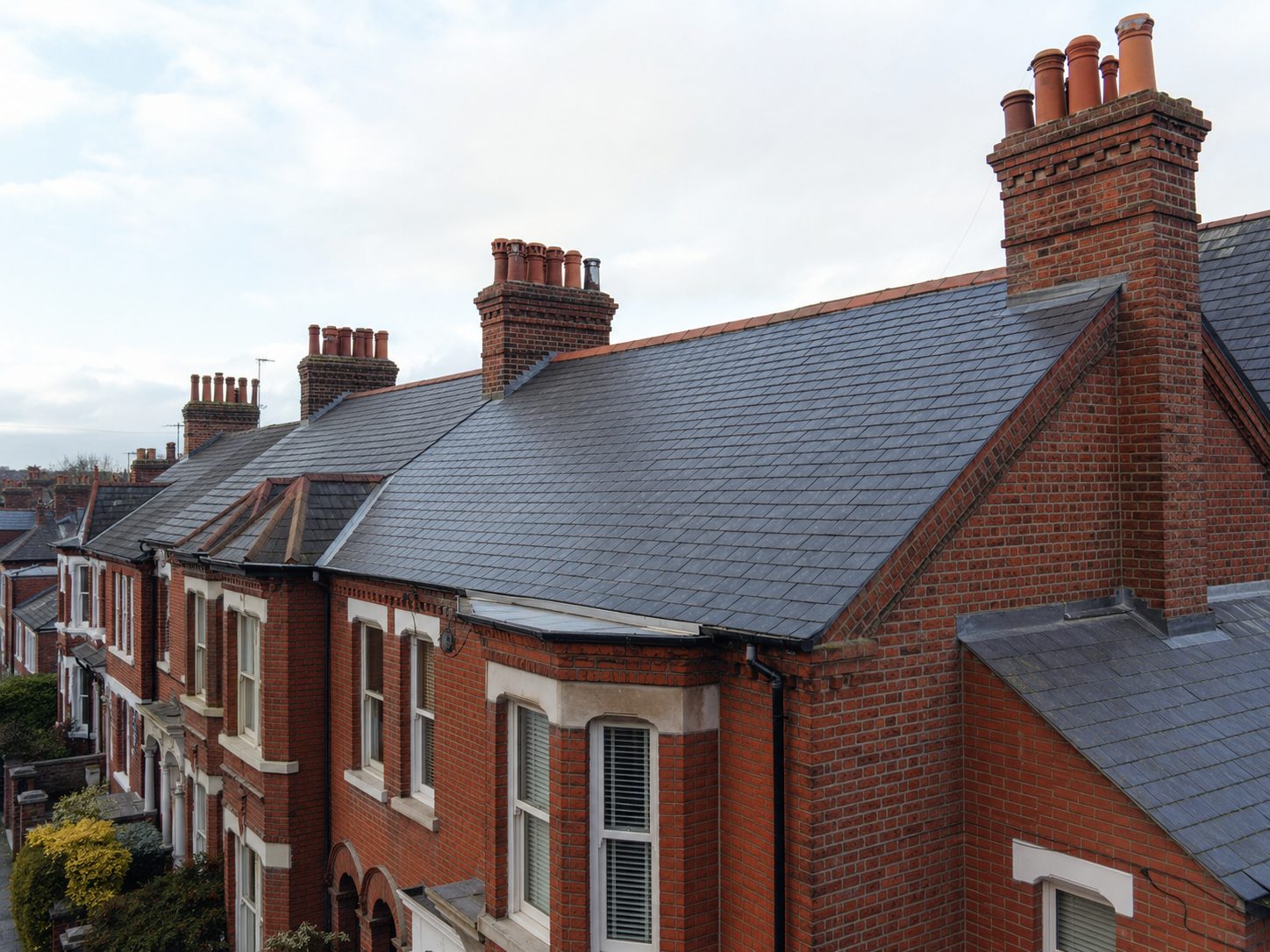
A good natural slate will outlast the nails that hold it, the battens beneath it and often the people who fitted it. That single fact shapes almost every decision about a slate roof: the question is usually not whether the slate is finished, but whether everything supporting it still is.
Nail fatigue and what it means for you
Slates are hung on nails. Over decades those nails corrode where they sit in the damp of the batten, thin down and eventually snap. When that starts happening across a slope, you get slates slipping steadily with no obvious pattern, a few after each windy spell.
The good news is that the slates themselves are frequently sound. On a strip and re-slate we sort the existing slates, discard the delaminated and cracked ones, buy in matching second-hand or new to make up the shortfall, and re-lay the roof on new battens and membrane with new fixings. That is often a better roof than a new covering in a different material, and it keeps the building looking right.
Reading a slate roof
Some things visible from the ground tell you a lot about what state it is in.
- Slipped slates in random positions, nail fatigue across the roof
- Tingles (metal clips) visible in numbers, repeated past repairs
- Slates delaminating or flaking at the tail, the slate itself is failing
- Sagging courses, battens or timbers rather than the covering
- Cement fillets instead of lead at abutments, a future leak
Detailing that makes the difference
Headlap set for the pitch and exposure, slate-and-a-half at verges and abutments rather than narrow cut pieces, proper lead soakers instead of mortar fillets, and eaves and ridge courses set out correctly. On exposed North Norfolk sites the exposure calculation genuinely matters, a headlap that is fine inland is not always enough on the coast.
Repairs on slate
Individual slates are refixed with copper tingles or, where the surrounding slates can be lifted, nailed properly. What we will not do is bed slates in mortar or seal them with mastic. It looks like a fix, it traps water, and it makes the eventual re-slate more expensive.
Common questions
Can my existing slates be reused?
Frequently, yes. We sort them on site, sound slates go back on, delaminated ones are discarded, and the shortfall is made up with matched slate. It usually reduces both cost and visual disruption.
Is fibre cement slate a reasonable substitute?
It has its place on budget-driven projects and some modern buildings. On a period property it reads differently from natural slate at close range, and in a conservation area it may not be acceptable.
How many slipped slates is too many?
When you are calling a roofer more than once or twice a year for the same slope, the fixings have reached the end of their life and repairs are no longer economic.
Do you work on listed buildings?
Yes, with the appropriate consents in place. Like-for-like materials and traditional details are usually what is required, and we will discuss what needs approving before work starts.