
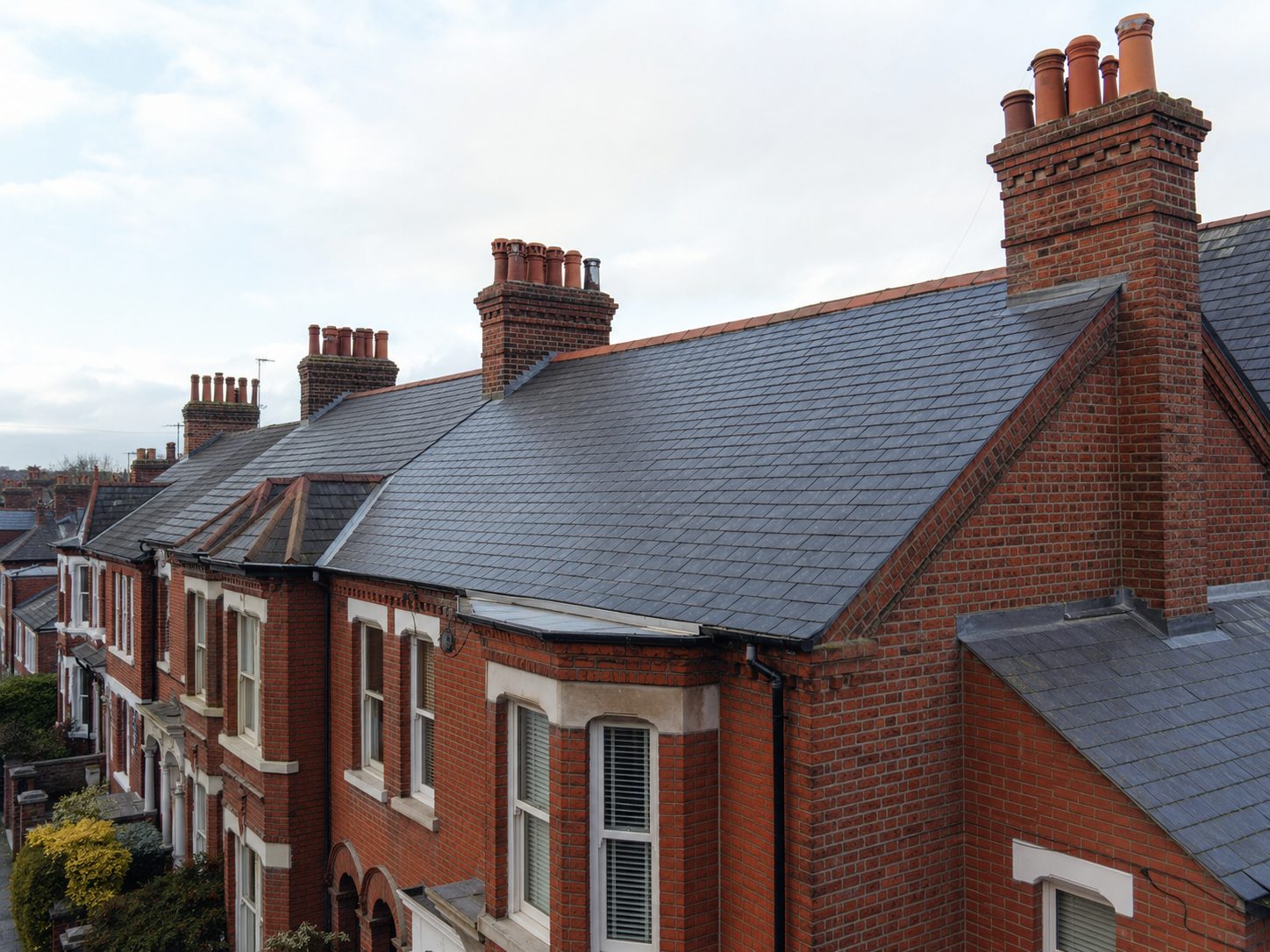
On most re-roofs the sensible starting point is like-for-like, because the building was designed around the covering it has. But there are good reasons to change, cost, weight, availability, or a previous owner having put the wrong thing on. Here is how the three main options compare on the things that actually matter.
Need this sorted?
Roof Replacement & New Roofs from Larke's Roofs.
Weight and structure
Weight is the constraint people forget until it causes a problem. Natural slate is light, clay pantile is light, and concrete tile is significantly heavier than either. Going lighter is never a structural concern. Going heavier on an old roof needs the timbers assessing first, and it is a decision we would not make on your behalf without saying so.
Pitch and exposure
Each covering has a minimum pitch, and that minimum rises with exposure. On the North Norfolk coast, where wind-driven rain is a fact of life rather than an occasional event, the safe minimum pitch and the headlap for a given covering are not the same as they would be in a sheltered inland village. We work this out for the specific roof rather than applying a national default.
- Plain clay tiles need the steepest pitches
- Pantiles work at lower pitches than plain tiles
- Slate depends on slate size and exposure category
- Interlocking concrete tiles are available for low pitches
Roof Replacement & New Roofs
- Full strip and re-roof
- Tile, slate and pantile coverings
- New battens, membrane and ventilation
Appearance and planning constraints
In a conservation area, or on a listed building, the covering is not purely your choice. Like-for-like natural materials are usually expected, and a concrete substitute may not be acceptable. Even where there is no formal constraint, a house in a street of red pantile roofs that goes grey concrete will always look like the odd one out, and that shows up when it is sold.
Cost over life
Concrete is the cheapest at day one. Natural slate is the most expensive and the longest lived, and on a re-slate the existing slates can often be reused, which changes the arithmetic completely. Clay pantile sits between the two and, in this part of the country, reclaimed stock is generally obtainable. We price the realistic options for your roof rather than quoting one and leaving you to wonder about the others.
Want a professional to handle it?
Common questions
Can I change from concrete tile to slate?
Usually yes, the structure is already carrying more weight than slate imposes. The cost difference and the appearance change are the real considerations.
Can I change from slate to concrete tile?
Only after the timbers have been assessed, because it adds significant load. In conservation areas it may also not be permitted.
Are reclaimed tiles as good as new?
Sound reclaimed clay tiles and slates can be excellent and are often the right choice for appearance. They have to be sorted properly, the skill is in rejecting the ones that will not last.
What do you fit most in Norfolk?
Clay pantile and concrete interlocking tile dominate, with natural slate on Victorian and period properties, particularly in the towns.
Related services
Covering Norwich and Norfolk.