
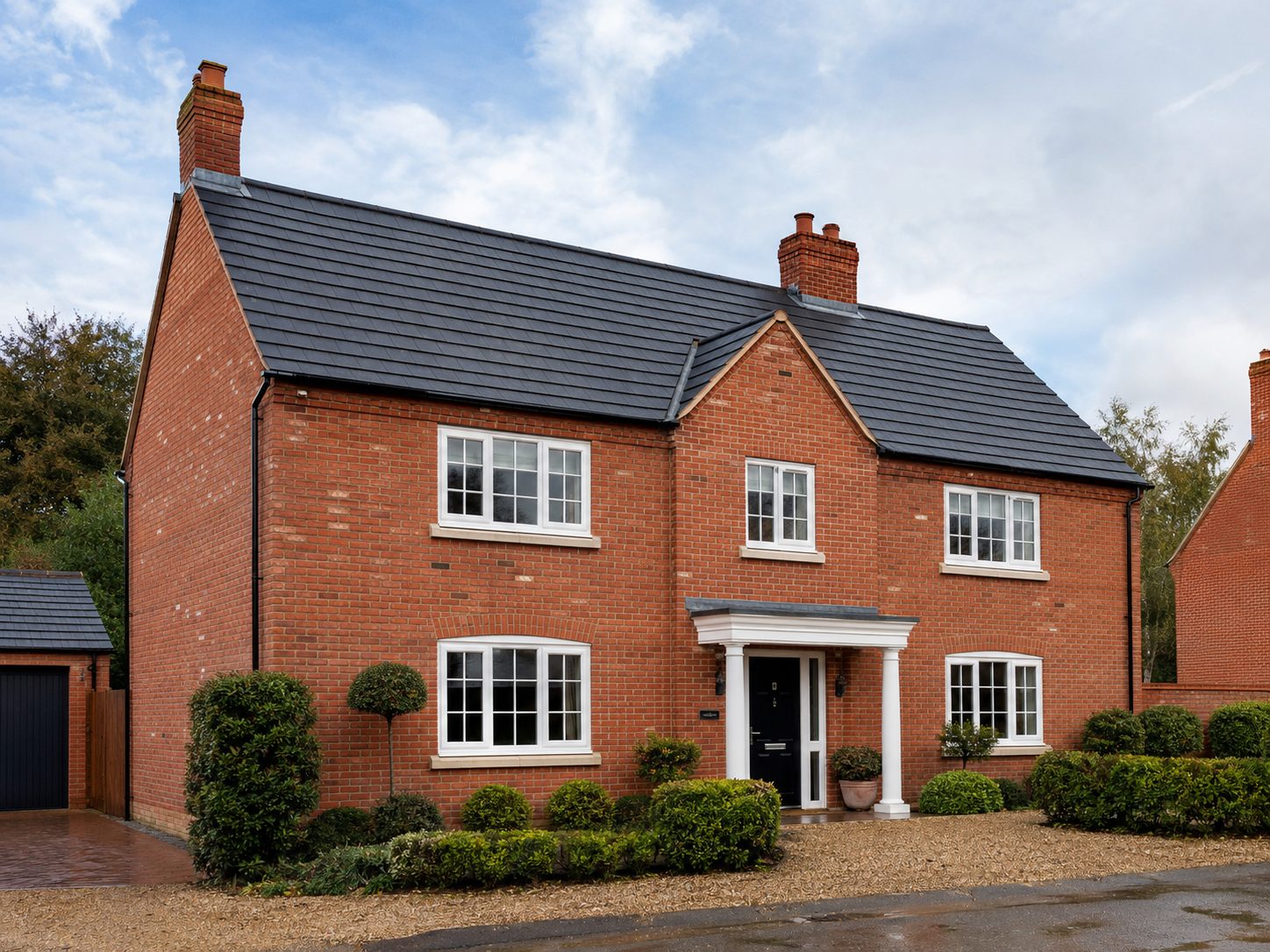
If your house was built after the 1950s, the roof is probably concrete interlocking tile. They are strong, widely available, straightforward to lay and considerably cheaper than clay or slate. Two things are worth understanding before you choose them for a re-roof: they are heavy, and their appearance changes with age.
The weight question
Concrete tile is heavy. On a roof designed for it, that is irrelevant. On an older roof originally built for slate or plain clay tile, re-covering in concrete adds load the structure was never designed to take, and it is one of the causes we see behind deflected rafters and purlins decades later.
If your property was built with a lighter covering and someone proposes concrete, the timbers should be assessed first. We will raise it rather than quietly quote the cheaper covering.
How they age
The colour of a concrete tile is largely surface pigment over grey concrete. It weathers, and after twenty or thirty years the roof reads greyer and duller than when it was laid. That is cosmetic, not structural, and it is why patch repairs on an old concrete roof rarely blend, new tiles look conspicuously fresher.
Older tiles can also become porous and start to hold moss and suffer frost damage at the exposed edges.
Where they are the sensible choice
For most modern estate housing, a like-for-like concrete re-roof is genuinely the right decision.
- Post-war and modern properties already built for the load
- Budget-driven full re-roofs where longevity matters more than appearance
- Large, simple slopes where laying speed keeps costs sensible
- Situations where profiles are still in production and matching is easy
Fittings do the failing
The tiles themselves usually outlast their surroundings. What needs attention over the life of a concrete roof is the mortar at ridge and verge, the underlay at the eaves, and the clips and nails at exposed edges. Dry-fix ridge and verge systems remove most of that recurring maintenance, and they are standard on the re-roofs we carry out.
Common questions
How long do concrete tiles last?
The tile itself has a long service life, often outlasting the fixings and mortar around it. Roofs are usually re-covered because of battens, underlay and details rather than because the tiles have worn out.
Can I swap concrete tiles for something lighter?
Yes, and reducing weight is rarely a structural problem. Going the other way, lighter to heavier, is the change that needs checking.
Why do my new tiles look different from the old ones?
Weathered pigment. There is no way to make a new tile match a thirty-year-old one exactly. On visible slopes we sometimes relocate weathered tiles from a hidden slope to keep the appearance consistent.
Do concrete tiles need clipping?
Fixing requirements depend on pitch, exposure and location, coastal and open sites need more. It is calculated rather than assumed, and it is one of the things that separates a proper re-roof from a cheap one.