
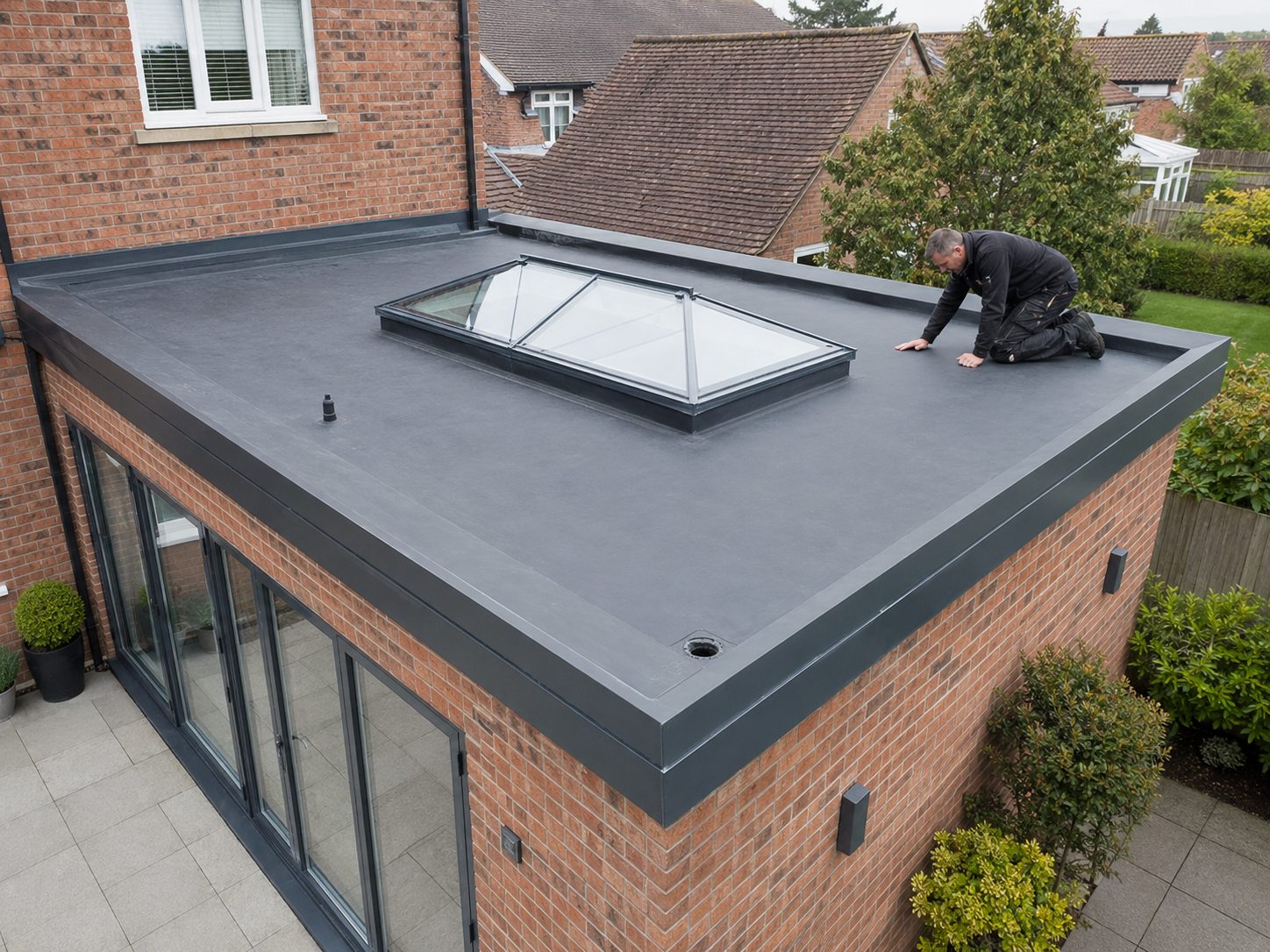
GRP is glass-reinforced polyester: chopped strand matting laid over the deck, wetted out with resin and cured in place, then finished with a pigmented topcoat. Unlike a membrane, it becomes a rigid shell bonded to the boards. That rigidity is simultaneously its greatest strength and the source of nearly every GRP failure we are called to.
Why people choose it
It produces a genuinely seamless surface including upstands and trims, it is hard enough to walk on without a separate protection layer, and it can be finished in a colour. On balconies, walkways, dormer cheeks and roofs that get used, that combination is difficult to beat.
It also bonds to a well-prepared deck completely, so there is no route for water to travel underneath if the surface is ever breached.
Installation conditions matter
GRP is a wet-applied chemical system. It needs a dry deck, appropriate temperatures and a weather window, laying it in the wrong conditions produces poor cure, pinholes and adhesion problems that only show up months later. A contractor willing to lay it in drizzle to keep to a schedule is doing you no favours.
- Deck must be OSB3 or ply, dry and correctly fixed
- Trims bonded in before the laminate, not after
- Full-width matting properly consolidated with no dry patches
- Topcoat applied within the resin's overlaminate window
How it fails
Because it cannot flex, it cracks wherever the structure moves and it cannot follow, commonly over deck joints, at the junction with a wall upstand, or across a roof where joists deflect under load. Fine surface crazing is usually just weathered topcoat and can be recoated; a linear crack means movement and needs cutting out and laminating in, with the movement itself addressed.
Repairs and recoating
GRP repairs well when done properly: grind back, key the surface, laminate in new matting and re-topcoat. Because the material is chemically the same, a good repair is genuinely integral rather than a patch stuck on top. Recoating a sound but faded roof with fresh topcoat is a cheap way to extend its life by years.
Drying time belongs to the installation conditions
A fibreglass roof is formed on the building, so the resin cure is part of the installation rather than a factory finish. Temperature, the dry condition of the deck and the weather window determine when the laminate and topcoat can be applied. There is no useful single drying time that replaces the requirements of the system being fitted.
Ask how the roof will be kept dry while those stages are completed and when access is suitable. A surface that looks finished does not by itself establish that curing and the topcoat sequence are complete. The quotation and programme should account for the conditions needed to produce a properly bonded GRP flat roof.
Choose between a surface recoat and structural repair
A faded finish and a crack following a board joint call for different work. Recoating addresses the weathered topcoat on a sound laminate. A crack needs its cause identified and the laminate repaired, including attention to any movement beneath it. Treating both as a colour problem leaves the important part of the inspection unanswered.
Before changing a failed GRP roof to another covering, establish the state of the deck and the junctions. Adding felt over the visible defect would not establish that movement or hidden damage has been dealt with. Compare a repair of the existing fibreglass system with a properly specified replacement through the flat roofing service. The choice should follow condition and use, not simply which material looks easiest to add.
Want it looked at? See our flat roof repairs and replacement across Norfolk.
Common questions
Is fibreglass better than rubber?
For a walkable, hard-wearing, colour-finished roof, yes. For a moving timber deck or a roof with imperfect falls, EPDM is more forgiving. We recommend based on the specific roof rather than a house preference.
Can GRP go over an existing flat roof?
No, it needs to be laminated onto a clean, dry, correctly fixed board deck. Anything else compromises the bond, which is the whole point of the system.
Can a cracked GRP roof be repaired?
Yes, and repairs integrate well. The important step is diagnosing why it cracked. Laminating over a moving joint just moves the crack a few centimetres.
Does the colour fade?
Topcoats weather over time, particularly darker colours. A recoat restores appearance and adds protection without touching the laminate underneath.
How long does a fibreglass roof take to dry?
Curing depends on the resin system, temperature and installation conditions. The deck must be dry and the laminate and topcoat stages must follow the system requirements.
Can you felt over a GRP roof?
Investigate the laminate, deck and cause of failure before changing systems. A new covering does not resolve movement or damaged boards underneath it.