
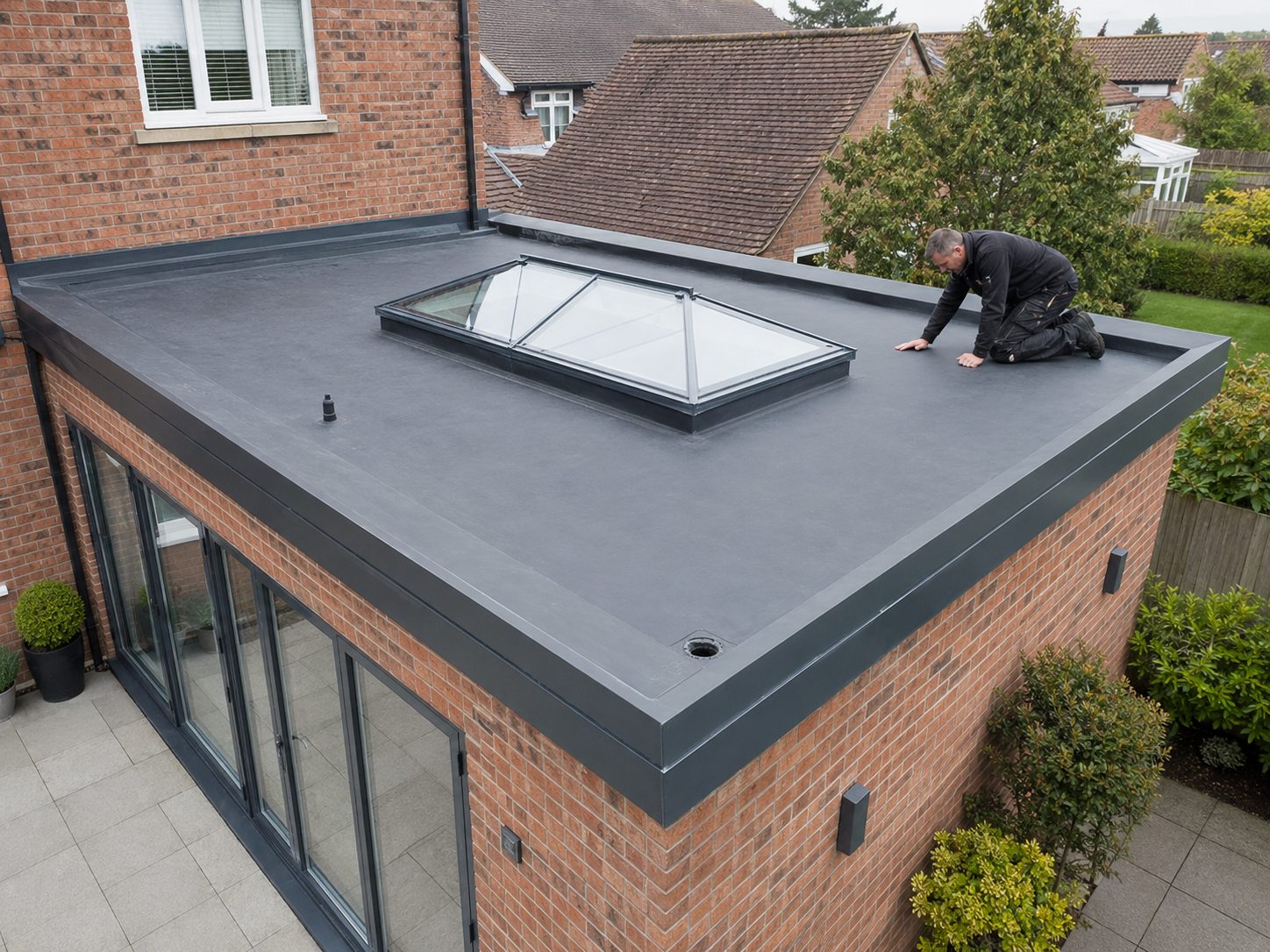
Felt has a poor reputation earned by cheap single-layer work from decades ago. Modern high-performance torch-on systems are a different product: polymer-modified bitumen membranes in two or three layers, heat-welded together, with proper detailing at upstands and outlets. Done properly, they are a durable and cost-effective covering.
Layers, not layer
The performance of a felt roof comes from building it up. A vapour control layer or underlay is bonded first, then intermediate and cap sheets are torched on with staggered laps so no joint sits above another. A mineral-finished cap sheet gives the UV protection. A single layer of felt nailed down is not a roofing system and never was.
Where felt still wins
It is the most economical of the three common domestic systems, it handles awkward shapes and multiple penetrations well because it is applied in pieces, and it repairs easily, a competent roofer can weld in a new patch that is chemically continuous with the original.
- Budget-sensitive replacements on outbuildings and garages
- Roofs with many penetrations, upstands or changes of level
- Repairs and localised overlays to existing felt roofs
- Situations where hot work is acceptable and safe
Its weaknesses
It is the least tolerant of the three systems to standing water, so falls really matter. It blisters where moisture is trapped below, and it becomes brittle with age and UV exposure. Torch-on work also involves a naked flame, which needs proper hot-work precautions and rules it out in certain situations, close to timber cladding, thatch or on some occupied commercial buildings.
Repair or replace an existing felt roof
Localised damage on a roof that is otherwise dry and well drained is worth repairing. Widespread blistering, a soft deck, or a roof that has already been overlaid once means replacement, and it is usually the moment to consider whether EPDM or GRP suits the roof better going forward.
What built-up felt roofing actually is
Built-up felt roofing is a flat roof covering made from several sheets of bitumen membrane bonded on top of each other, rather than one sheet laid loose. Each layer has a job. The first is bonded to the deck or insulation, the middle layer adds thickness and strength, and the cap sheet on top carries a mineral finish that shields the bitumen from sunlight. Because the joints in each layer are staggered, water has to find its way through every sheet before it reaches the deck.
Torch-on felt is the modern way of building that system. The underside of each sheet is heated with a gas torch until the bitumen softens, then rolled out so it welds to the layer beneath. Older roofs were often laid in hot poured bitumen, and some very old garage roofs were a single nailed sheet, which is why felt earned a poor name. A properly built multi-layer torch-on roof behaves very differently from those.
Roofing felt replacement: repair, overlay or strip
Not every tired felt roof needs to come off. A sound roof with a split, a lifted lap or a blister can often take a welded patch that bonds to the original. Where the cap sheet has crazed all over but the deck is dry and firm, an overlay may be possible. Where the deck has softened, water is trapped between layers or the falls have sunk into a dish, the honest answer is a full strip and replacement, starting with the boards.
At the inspection we check the deck from above and, where we can, from below, look at the upstands and edge trims, and note where water sits after rain. Those three things decide which route makes sense. The written quote then describes the work proposed for your roof rather than a general price for felt.
Felt roof vs rubber: choosing between them
Felt and EPDM rubber both make good flat roofs when they are laid properly. Felt copes well with awkward shapes, lots of pipes and changes of level, because it goes down in pieces and every lap is welded. EPDM is usually laid as one sheet with very few joints, is applied cold with no flame on the roof, and suits plain rectangular roofs such as garages and extensions. GRP fibreglass is the third option where a hard, seamless finish is wanted.
If you are comparing quotes, ask how many layers are included, what happens at the upstands and outlets, and whether any deck work is allowed for. Our EPDM rubber and GRP fibreglass pages explain the alternatives, and the flat roofing service page covers how we quote.
Want it looked at? See our flat roof repairs and replacement across Norfolk.
Common questions
How long does a torch-on felt roof last?
A properly specified multi-layer system commonly gives 15-20 years. Cheap single-layer work gives a fraction of that, which is where felt's reputation came from.
Is felt cheaper than EPDM?
Usually yes on initial cost. Over the lifetime the gap narrows considerably, so it is worth comparing both when a roof is being replaced rather than repaired.
Can felt be laid in winter?
It is less weather-dependent than GRP, but it still needs a dry deck and safe conditions for hot work. We will not torch onto a wet substrate.
Can you patch my existing felt roof?
Where the roof has life left in it, yes, welded-in patches integrate well. We will tell you if patching is simply postponing an inevitable replacement.
What is built-up felt roofing?
It is a flat roof covering made from two or three layers of bitumen membrane bonded together with staggered joints, finished with a mineral cap sheet that protects the roof from sunlight.
How many layers of felt on a flat roof?
A modern built-up felt flat roof normally has two or three layers: a base layer, sometimes an intermediate layer, and a mineral-finished cap sheet. A single nailed sheet is not a proper flat roof system.
How many layers of felt on a pitched roof?
On a pitched tiled or slated roof the felt is an underlay beneath the battens, laid as a single layer with overlapping courses. It is a different product from flat roof felt and does the job of catching any water that gets past the tiles.
What is roofing felt?
Roofing felt is a sheet material reinforced with a carrier and coated in bitumen. On flat roofs it is the waterproof covering itself; on pitched roofs it is the underlay that sits beneath the tiles or slates.