
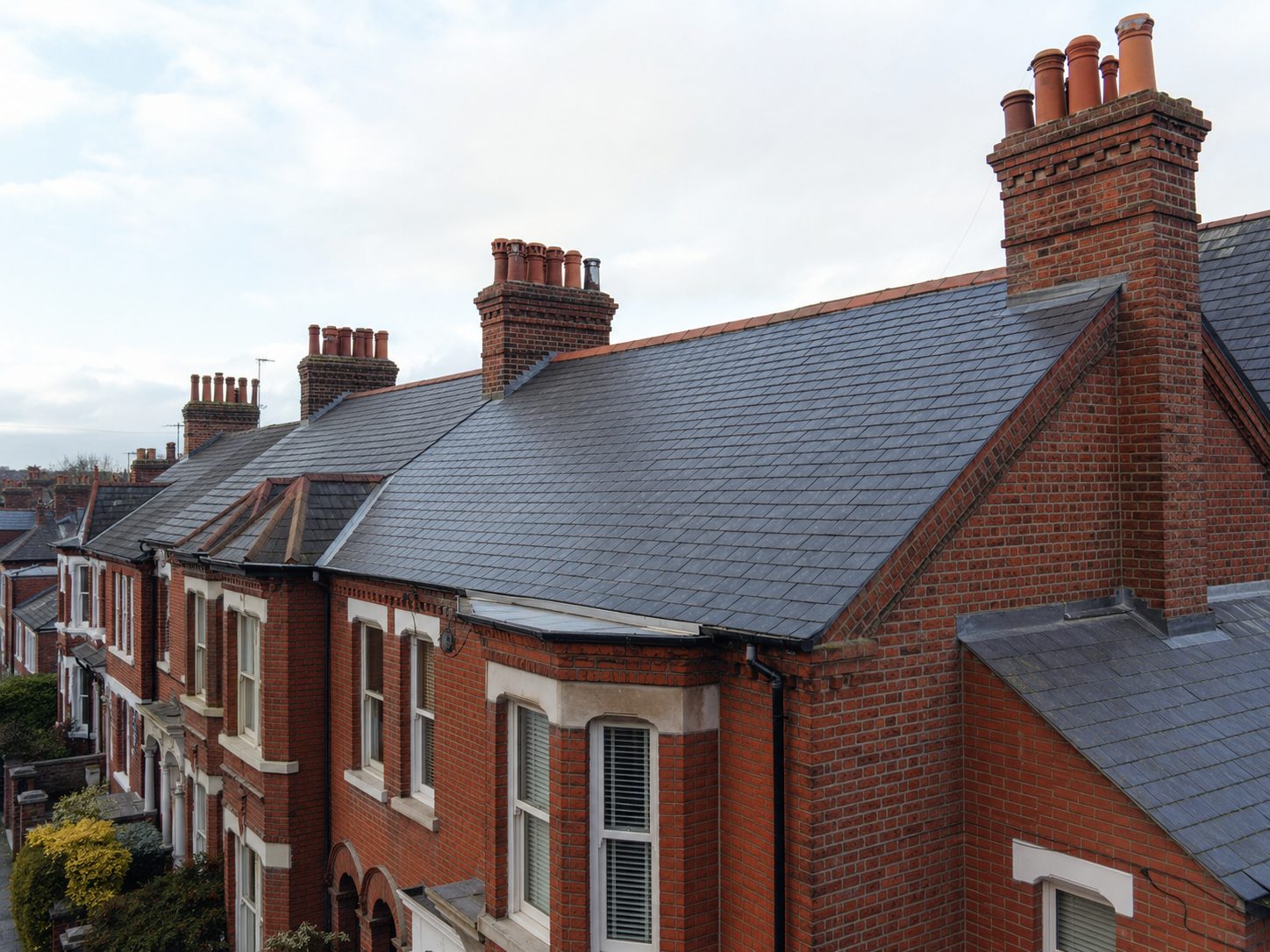
Plenty of old Norfolk roofs have a gentle wave in them and always have. Timber settles, walls move slightly, and a two-hundred-year-old cottage that has held its shape for a century is not usually an emergency. What matters is whether the movement is historic and stable or active and getting worse.
Need this sorted?
Roof Repairs & Leaks from Larke's Roofs.
Historic or active?
The useful evidence is change over time. Old photographs, a dip that neighbours remember being there twenty years ago, and plaster cracks that have been decorated over and not reopened all suggest settled movement. Fresh cracking, gaps opening at the wall head, doors that have started to bind, and tiles that have begun slipping in the middle of a slope suggest something is moving now.
What is usually behind it
In roofs of traditional construction the causes are fairly limited and generally identifiable from inside the roof space.
- Rafters spreading at the feet, pushing the wall plates outwards
- A purlin that has deflected or lost its bearing into a gable wall
- Ceiling ties cut or removed during a past loft conversion
- Rot at rafter feet where gutters overflowed for years
- Overloading, often from a heavier covering than the roof was built for
Roof Repairs & Leaks
- Leak tracing and repair
- Slipped and broken tiles
- Storm damage repairs
The covering can hide it or reveal it
Replacing a slate roof with concrete tiles adds significant weight, and we still see roofs where a covering swap decades ago is the reason for today's deflection. Equally, stripping a roof is the point at which the true condition of the timbers becomes visible, so structural work and a re-roof frequently go together.
Where our work stops
We are roofers. We can replace rotten rafter feet, sister timbers, renew battens and rebuild the covering to spread load correctly. Where the movement is structural, spreading walls, a failing purlin bearing, or anything involving load paths, the right step is a structural engineer's assessment first, and we will tell you that rather than take on work that needs someone else's design.
Common causes of a sagging roof in the UK
Most sagging roofs in older UK houses come down to timber and weight. Rafters and purlins that were slender when the house was built can creep over decades, especially if heavier tiles have replaced lighter slates at some point. Long-term damp weakens timber where leaks have gone unnoticed, and insect attack can reduce the strength of key members. Walls that have moved outwards, often called roof spread, let the feet of the rafters slide and the ridge drop.
Alterations are another common cause. Purlin struts or binders removed to make loft space, or a water tank added without support, can overload parts of the structure. In those cases the dip often lines up with the change.
Why is my new roof sagging?
A new roof that dips soon after it is finished usually points to one of a few things: battens that are uneven or undersized, rafters that were already distorted and were not packed or corrected before the new covering went on, or heavier tiles laid on a structure designed for something lighter. Occasionally the problem is a cosmetic wave in the tile lines rather than structural movement.
If your roof was replaced recently and you can see a dip that was not there before, speak to the original installer first and keep photographs taken from the same position over time. That record helps anyone who later inspects the roof decide whether the movement is continuing.
Roof truss repair and strengthening
Trussed rafter roofs, common on houses built from the 1960s onward, rely on every member being intact. Cut or damaged truss members should not be left, and any repair to a truss should follow a design from a structural engineer. Typical remedies include adding new timbers alongside the damaged ones, fitting bracing that has been omitted, or replacing failed members.
Where the structure is sound but the covering has become too heavy or the battens have failed, stripping and relaying the roof with new battens may correct the line. Our roof replacement page describes that process. Where we find signs of active structural movement, we will say so plainly and recommend an engineer before any roofing work is quoted.
Want a professional to handle it?
Common questions
Is a dipped ridge dangerous?
Not usually in itself. Historic, stable settlement on an old roof is very common. Movement that is progressing needs assessing, and that assessment is worth having before spending money on a new covering.
Can a new roof straighten the line?
Partially. On a re-roof the battens can be packed to take out some of the visual dip, but the underlying structure still governs. Pretending a covering can correct a structural problem is how people end up paying twice.
Do you work with structural engineers?
Yes. Where a report is needed we will explain what to ask for, and we price and carry out the roofing works once the structural approach is agreed.
My roof was re-covered in concrete tiles. Should I worry?
It is worth having the timbers looked at. Concrete is substantially heavier than the slate it often replaced, and older roofs were not always designed for it.
Why is my new roof sagging?
Common reasons are uneven battens, distorted rafters that were not corrected before re-covering, or heavier tiles on a structure designed for lighter ones. Record the dip with photographs and contact the original installer.
Is a sagging roof dangerous?
Not always. Many old roofs have a stable historic dip. Movement that is new, getting worse or accompanied by cracks in walls or ceilings should be looked at promptly.
Can roof trusses be repaired?
Yes, damaged truss members can usually be strengthened or replaced, but the repair should follow a structural engineer's design.
Will a new roof fix a sagging roof?
Only if the cause is in the battens or covering. If the rafters, purlins or walls are moving, the structure needs dealing with first.
Related services
Covering Norwich and Norfolk.