
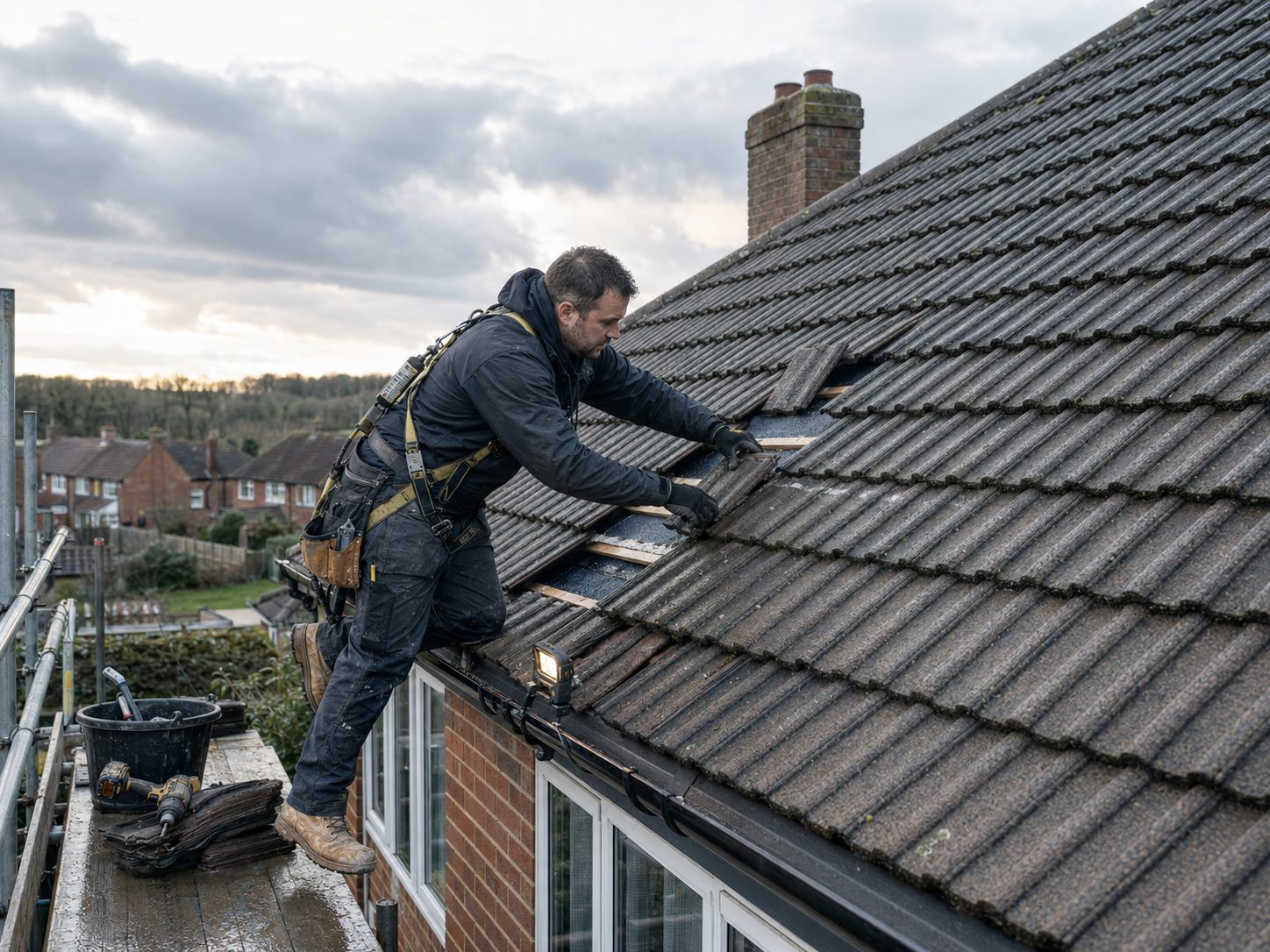
East Anglia takes its weather off the North Sea with very little in the way to slow it down. When a named storm comes through, the calls we get are consistent: ridge tiles off, verges lifted, felt torn back on a flat roof, and lead flashings peeled away from a gable. The priority order matters, safe first, watertight second, permanent repair third.
Need this sorted?
Roof Repairs & Leaks from Larke's Roofs.
Make it safe before anything else
A dislodged ridge tile or a lifted sheet is a hazard to people below long before it is a leak. Keep everyone away from the area under the damage, move cars, and do not go up a ladder in wind to look. Photograph what you can see from the ground, that record is worth having later.
If tiles have come down, leave them where they are until they have been photographed. Insurers ask, and it costs nothing to leave a pile of broken pantiles on the lawn for an afternoon.
Temporary versus permanent
After a storm, materials and labour are both in demand and getting the same day permanent repair is not always realistic. A properly fitted temporary cover, sheeting fixed down to battens, not weighted with bricks, stops further water damage and buys time to do the real repair properly.
We are clear about which one we are doing on any given visit, and a temporary measure is always quoted separately from the permanent works so nothing is hidden.
Roof Repairs & Leaks
- Leak tracing and repair
- Slipped and broken tiles
- Storm damage repairs
What storms typically take first
Wind damage is rarely random. It concentrates on edges and any detail that was already slightly loose.
- Ridge and hip tiles bedded on tired mortar
- Verges on the gable facing the prevailing south-westerly
- Felt and single-ply flat roofs where the perimeter fixing has aged
- Lead flashings on exposed abutments
- Dry-fix components installed without the clips being engaged
- Fascia, soffit and guttering pulled down by debris
Insurance inspections and reports
Most storm claims turn on evidence: what failed, whether wind speeds were consistent with the damage, and whether the roof was in reasonable condition beforehand. We carry out inspections and produce written reports with photographs for insurance purposes, describing what we found factually and what the repair requires.
We do not tell insurers what they want to hear. If part of the damage is age-related rather than storm-related, the report will say so, and that is usually better for you than a claim that unravels later.
Want a professional to handle it?
Common questions
Should I claim on insurance or just pay for the repair?
For small repairs the excess often exceeds the cost. For structural damage, multiple slopes or anything involving the roof structure it is usually worth claiming. We can price the work either way so you can decide with real numbers in front of you.
How quickly can you attend after a storm?
An emergency call-out service is advertised 24/7. During a widespread storm we prioritise making properties safe and watertight, and we will be straight with you about timing when you call rather than promise a slot we cannot keep.
Is a tarpaulin held down with bricks acceptable?
No. Weighted sheeting usually becomes the next problem in the next gust. Temporary covers should be fixed down mechanically to sound timber and taken back off when the permanent repair is done.
Can you provide a report for my insurer?
Yes, we carry out insurance inspections and provide written reports with photographs describing the damage found and the works required.
Related services
Covering Norwich and Norfolk.