
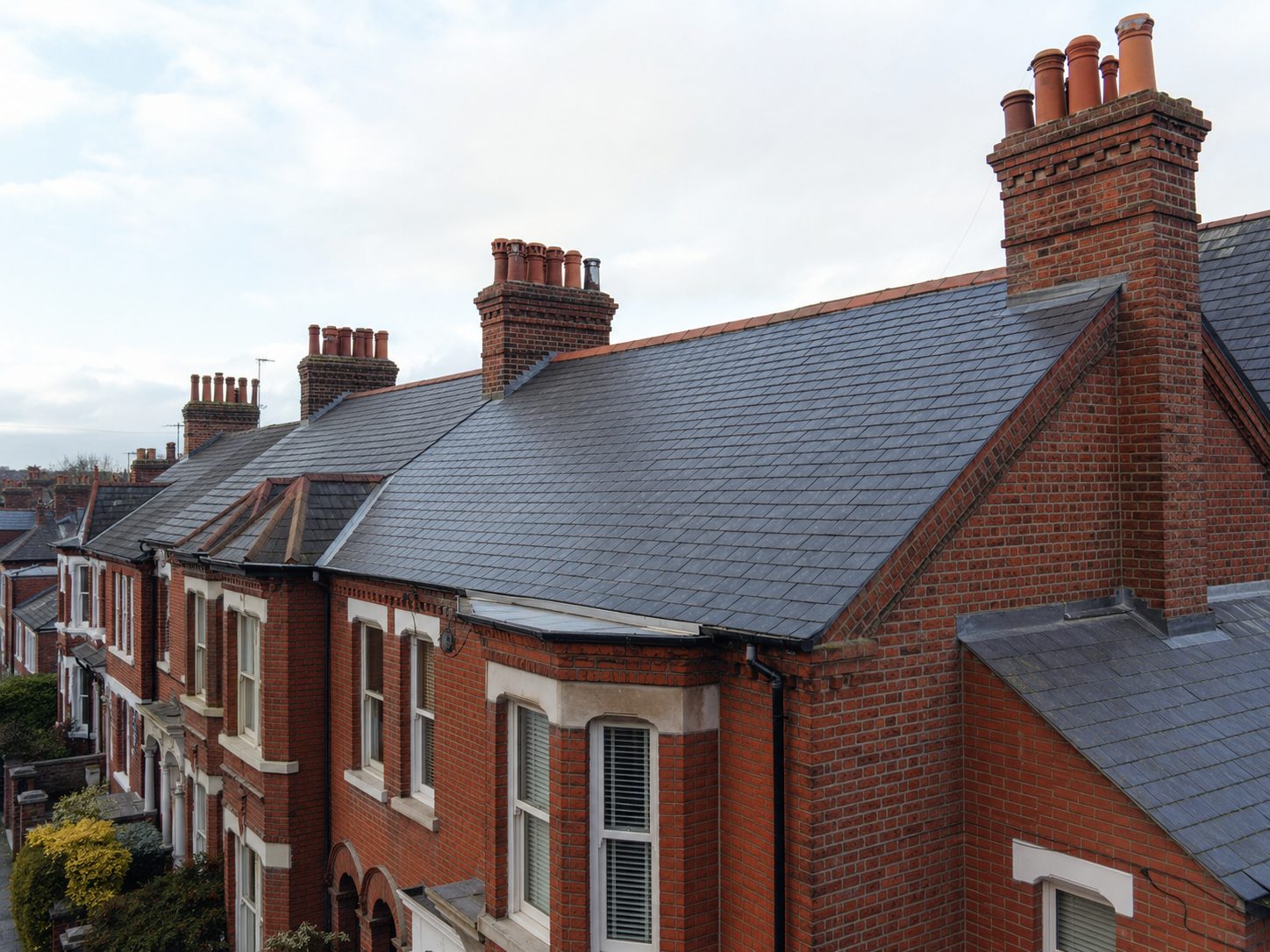
A roof three miles inland and a roof on the North Norfolk coast are not the same job with a different postcode. Wind exposure changes the fixing specification. Salt changes what metals can be used. Driving rain finds laps and verges that would never be tested elsewhere. Specifying a coastal roof to inland assumptions is why some of them fail early.
Exposure is a calculation, not an opinion
Fixing specifications for tiles and slates depend on wind loading, which depends on location, altitude, topography and how sheltered the building is. On the coast that calculation regularly pushes you to clipping every tile where an inland roof would need far fewer. It also raises the minimum pitch and headlap for a given covering.
This is one of the concrete differences between a properly specified re-roof and a cheap one, and it is invisible once the tiles are on.
What the sea air does to fixings
Salt-laden air accelerates corrosion, and the components that suffer are the ones holding your roof together.
- Nails and clips specified for the environment rather than the price list
- Careful attention to any dissimilar metals in contact
- Rainwater goods and fixings chosen for a corrosive atmosphere
- Lead detailing, which handles coastal conditions very well
The details wind attacks first
On every exposed roof we survey, the pattern is the same: the gable facing the prevailing wind has lost its verge mortar, the ridge has cracked and lifted, and the flashings on the seaward side have started to peel out of the joint. Those are the details worth over-specifying on the coast, because they are the ones that will be tested every winter.
Maintenance matters more here
An inland roof can be ignored for years and forgive you. A coastal one cannot. An annual look at the verges, ridge and flashings, and clearing anything that has silted up, is genuinely the difference between a long-lived roof and repeated repairs. We work along this coast constantly and would always rather be booked for a check in the autumn than a call-out in January.
Common questions
Does every tile need clipping on a coastal roof?
Frequently yes, depending on the exposure calculation for the specific site. It is worked out rather than assumed.
Is slate or pantile better on the coast?
Both work when specified properly. What matters more is headlap, fixing specification and the quality of the verge, ridge and flashing details.
Why does my coastal roof leak only in certain winds?
Wind-driven rain on the exposed elevation is being pushed under a lap, a verge or a flashing that copes fine in ordinary rain. The wind direction when it happens tells us where to look.
Do you cover the whole North Norfolk coast?
We work across Norfolk from our base in Costessey, and the coastal villages are a regular part of our week.