
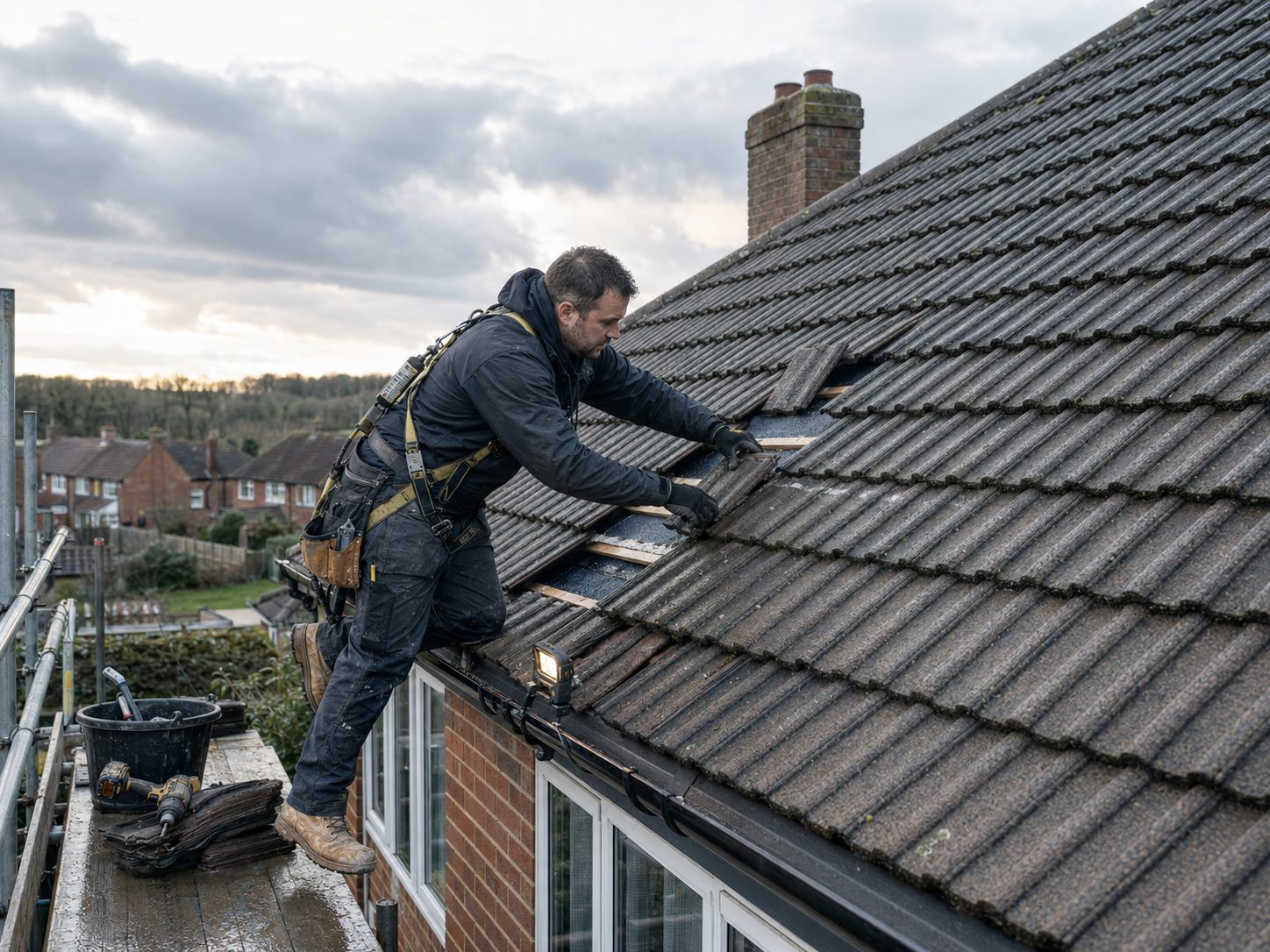
Most roof claims turn on two questions: was the damage caused by a sudden insured event, and was the roof in reasonable condition beforehand. Understanding that shapes what evidence is worth gathering and what to expect from an inspection. We carry out inspections and produce written reports for insurance purposes, factual descriptions of what we found and what the repair requires.
Need this sorted?
Roof Repairs & Leaks from Larke's Roofs.
What insurers usually want
The basics are consistent: when the damage occurred or was noticed, what the weather was doing, photographs of the damage, and a competent description of the cause and the remedial work. The more of that you have from the beginning, the smoother the claim.
- Dated photographs from the ground, before anything is cleared
- The damaged tiles, slates or components kept rather than skipped
- A note of the date and the weather at the time
- Any temporary works receipts, kept separate from the permanent repair
- A written inspection report describing cause and required works
Where claims commonly fail
The most frequent reason is that the damage is judged to be wear and tear rather than a single event, mortar that had been cracked for years, a covering already at the end of its life, or maintenance that had not been done. Gradual deterioration is generally not insured, and no amount of wording changes that.
The second is inconsistency: a claim described as storm damage on a day when local wind speeds do not support it. We describe what we find accurately, and that is deliberately in your interest, a report that overstates the case is the one that gets challenged.
Roof Repairs & Leaks
- Leak tracing and repair
- Slipped and broken tiles
- Storm damage repairs
Temporary works and mitigation
Policies generally expect you to prevent further damage where you reasonably can. Getting a roof made safe and temporarily watertight is normally the right thing to do and normally recoverable, provided it is documented. We quote temporary works separately from permanent repairs precisely so that the claim is clean.
Should you claim at all?
For a modest repair, the excess and the effect on future premiums often outweigh the payout. For significant damage across several slopes, structural damage or internal damage to ceilings and contents, claiming usually makes sense. We will price the work either way so you can decide with the numbers in front of you rather than in the abstract.
Want a professional to handle it?
Common questions
Do you deal with insurers directly?
We provide the inspection, the written report and the quotation for the works. The claim itself is between you and your insurer, though we are happy to answer their technical questions about what we found.
What counts as storm damage?
Broadly, damage caused by a sudden severe weather event rather than by gradual deterioration. Insurers typically look at recorded wind speeds and the pattern of damage.
My claim was declined as wear and tear. What now?
The repair still needs doing. We will price it as ordinary work and, where the assessment misread what we found, our report sets out the facts you can put back to the insurer.
How quickly can you produce a report?
Normally shortly after the inspection. Tell us when you speak to us that it is for an insurance claim so we photograph and record it appropriately on the visit.
Related services
Covering Norwich and Norfolk.