
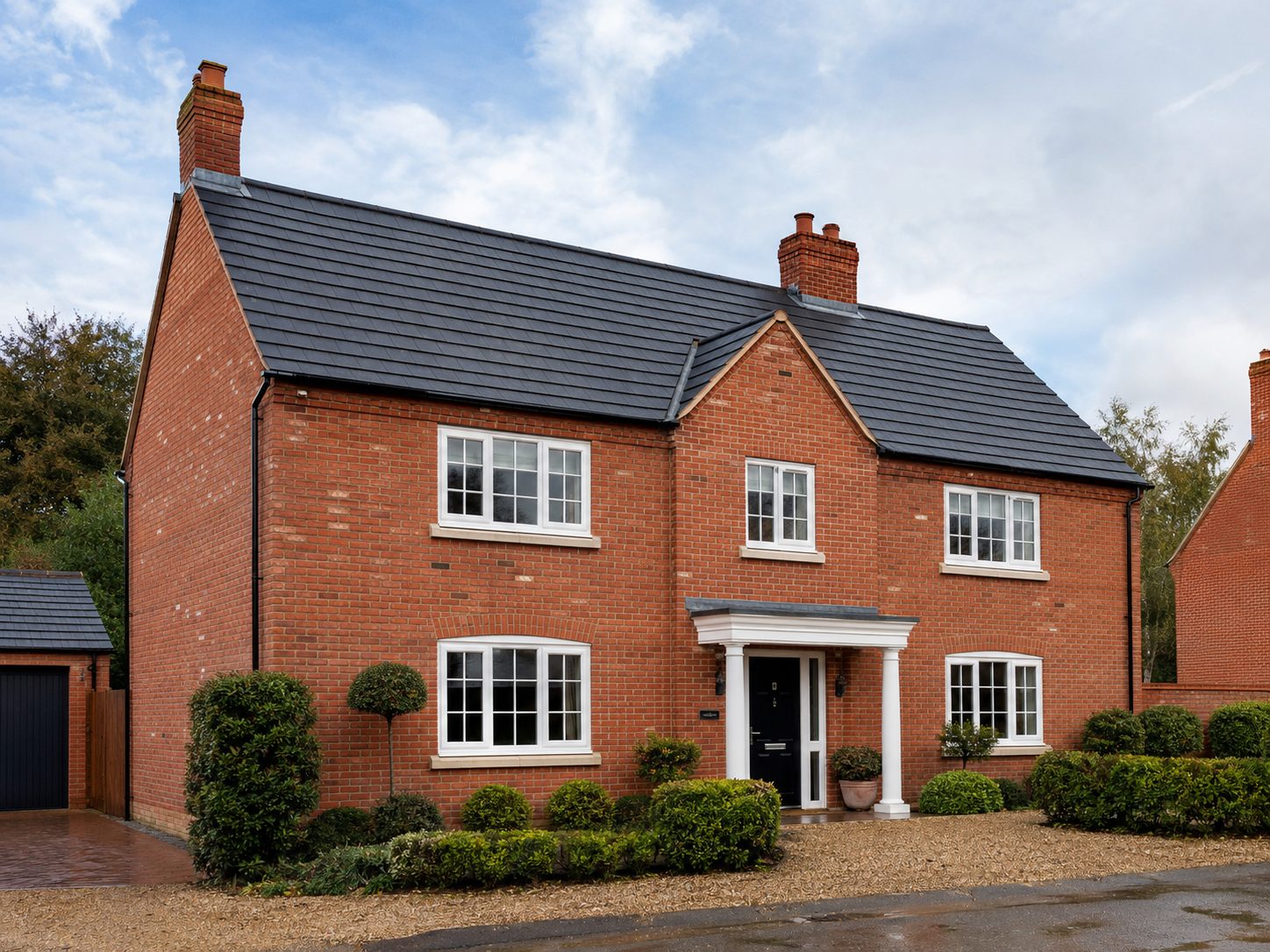
Pantiles are the covering you see on more Norfolk roofs than anything else, from flint cottages on the coast road to brick terraces in Norwich and farm ranges out on the fen edge. They behave differently from concrete interlocking tiles and they are priced differently, mostly because of how they are laid, how they are cut and how hard sound matching stock is to find. This page explains where the money actually goes on a clay roof.
Need this sorted?
Roof Replacement & New Roofs from Larke's Roofs.
Why clay costs more than concrete
The tile itself is dearer, but the bigger difference is the laying. Pantiles interlock along a single side lap and their s-curve leaves the verge, the valley and every abutment needing a proper cut, a filler or a lead detail. That is time, and time is most of a roofing quote.
Concrete interlocking tiles cover more area per tile and forgive small irregularities. On a straightforward roof they are the cheapest way to get a sound covering, and they are entirely appropriate on post-war housing where nobody is trying to match a period elevation.
New clay or reclaimed clay
New clay pantiles are consistent, straight and come with a long material warranty. Reclaimed pantiles carry the weathered colour that makes an old cottage look right, but sound stock is limited and it has to be sorted, with breakages allowed for. On a repair to a visible elevation reclaimed is usually worth it. On a full re-roof of a rear slope nobody sees, new clay often makes better sense.
A common compromise on period properties is reclaimed tiles on the front elevation and new on the back, with the salvaged stock concentrated where it shows.
Roof Replacement & New Roofs
- Full strip and re-roof
- Tile, slate and pantile coverings
- New battens, membrane and ventilation
Matching an existing roof
Pantile patterns vary in gauge, curve and size. If we are repairing rather than re-roofing, matching matters, because a patch of the wrong profile stands out from the road and can leave a step that lets water track sideways. We check what you have before we order anything.
What clay roofs usually need at the same time
On an older Norfolk pantile roof the tiles themselves are often the healthiest thing up there. It is the fixings and the details that have aged.
- Battens, which are the usual reason tiles slip on a hundred-year-old roof
- Torching or old bitumen felt replaced with a breather membrane
- Mortar bedding at ridge and verge, or a change to dry-fix
- Lead to chimneys, valleys and abutments, often previously patched in cement
- Ventilation, which older pantile roofs frequently never had
Listed buildings and conservation areas
Across north Norfolk in particular, a great many pantile roofs sit on listed buildings or in conservation areas, where the covering, the fixing method and sometimes the mortar mix are not free choices. That changes both the specification and the price. We survey with that in mind rather than quoting a standard re-roof and discovering the constraint later.
Want a professional to handle it?
Common questions
Are clay pantiles more expensive than concrete tiles?
Yes, on both material and labour, mostly because of the cutting and detailing at verges and valleys. On period properties the appearance and the planning position usually make clay the right choice anyway.
Can you reuse my existing pantiles?
Often, yes. Sound clay frequently outlives the battens and nails holding it. We assess how much of the existing stock is reusable at survey and allow for the shortfall in writing.
How long does a clay pantile roof last?
The tiles themselves are long lived, and it is normally the battens, fixings and mortar details that fail first. That is why a strip and re-lay using sound existing tiles is such a common job on older Norfolk properties.
Do pantiles suit a coastal property?
They are the traditional coastal covering here and they cope well, but exposed sites put more strain on verges, ridges and fixings. On the coast road we detail those points more heavily rather than treating the roof as an inland one.
Do you work on listed buildings?
Yes. Heritage and listed-building roofing is part of what we do, including leadwork and matched coverings.
Related services
Covering Norwich and Norfolk.