
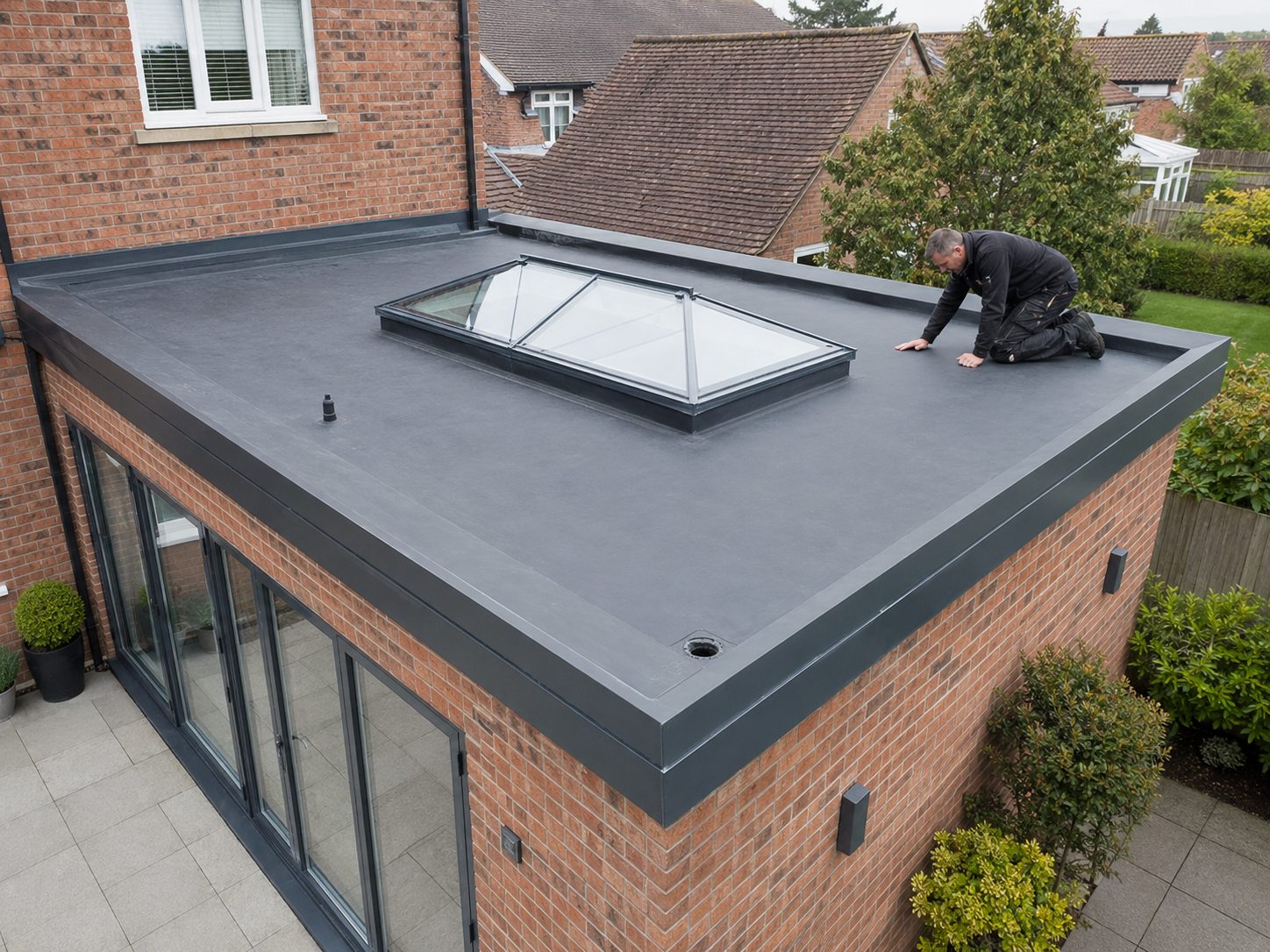
On an extension the roof is usually the part that decides whether the project leaks in five years, and it is often the part that gets specified last. The junction between new and existing, the flat-to-pitched detail, the upstands against the original wall, these are the places where a well-built extension goes wrong, and they need thinking about before the walls go up rather than after.
Get the levels right before the walls
A warm roof build-up adds height. If that has not been allowed for, you end up with an upstand that is too short against the existing wall, a door threshold that is now too close to the finished roof level, or a rooflight kerb that does not work. Sorting it on paper costs nothing; sorting it after the blockwork is up costs a great deal.
The junction with the existing roof
Where a new flat roof abuts an existing pitched roof or wall, that junction takes all the water coming off the older, larger roof. It needs a properly formed upstand, a cut-in cover flashing or chase, and where the extension meets a tiled slope, correctly interleaved leadwork. Mastic and a strip of flashing tape is not a detail, and it is what we are most often called back to sort out on other people's extensions.
- Adequate upstand height, formed before the covering goes on
- Cut-in lead cover flashing rather than surface-fixed and sealed
- Correct outlet position and size for the new roof area
- Interface with existing gutters and downpipes thought through
- Rooflight and lantern kerbs formed and covered properly
Matching a tiled extension roof
Where the extension is pitched and tiled, matching the existing covering is the difference between an extension that looks original and one that is obviously bolted on. On older properties that usually means reclaimed tile, and it is worth sourcing before the roof is due rather than during.
Working with your builder
We are used to coming in as the roofing package on someone else's job. That means turning up when the structure is ready, not before, being clear about what we need in place, and leaving the roof in a state the next trade can work with. If we can see something in the design that will cause a problem, we raise it at the start.
Common questions
Can you work as a subcontractor to our builder?
Yes, extension and new build roofing packages are a regular part of our work. We will fit into the programme and coordinate with the main contractor.
Which covering is best for an extension?
For a flat extension roof we would usually specify EPDM unless it will be walked on, in which case GRP. For a pitched extension, matching the existing covering.
Do you handle the rooflight or lantern?
We form and weather the kerb and coordinate with the glazing. Tell us the product early so the kerb is built to suit it.
How early should we involve a roofer?
At design stage if possible, and certainly before the walls reach roof level. Most extension roof problems are decided before anyone lays a membrane.