
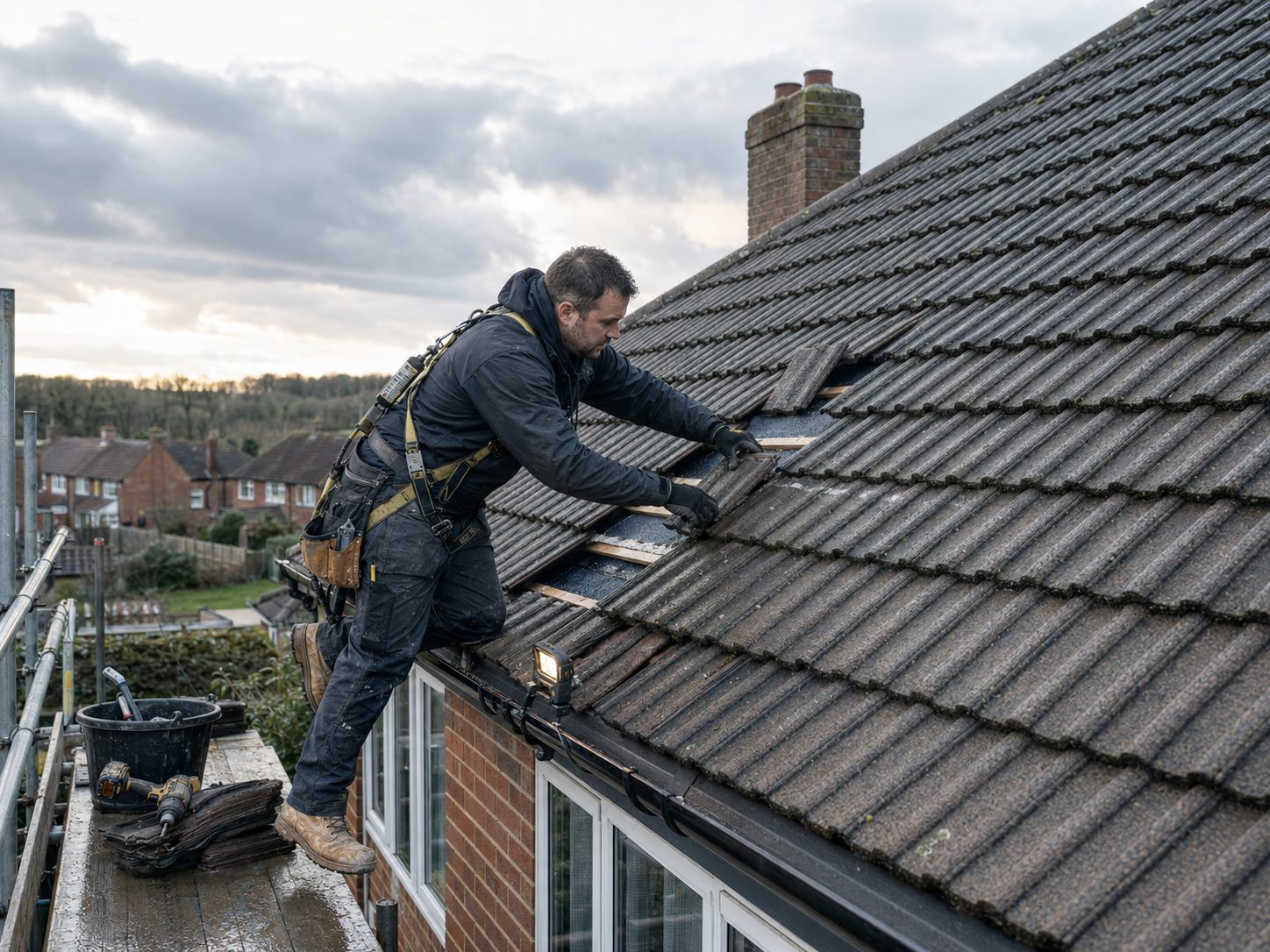
When a roof lets go, the damage in the first hour is usually water damage rather than roof damage. Ceilings, plaster, flooring and electrics cost far more to put right than the handful of tiles or the split flashing that let the water in. This page is written to be read quickly. It covers what to do inside, what not to do outside, what to photograph before anything is cleaned up, and what happens when we get there. We cover emergency call outs across Norfolk.
Need this sorted?
Roof Repairs & Leaks from Larke's Roofs.
Make the room safe before you worry about the roof
Move people and pets out of the affected room. Water tracking through a ceiling can find a light fitting, so if water is anywhere near a light, a downlight or a socket, turn that circuit off at the consumer unit and leave it off.
Get contents out of the way, then protect the floor. Buckets under the drip are obvious, but a plastic sheet or old towels spread wide underneath does more good, because water rarely comes through in one tidy place.
If the ceiling is bulging, it is holding a pool of water. That is genuinely dangerous. From a safe distance, with a bucket underneath, piercing the lowest point of the bulge with something long lets it drain in a controlled way instead of the whole ceiling coming down at once.
What not to do
Do not go up on the roof. Wet tiles, wet slates and wet flat roofs are treacherous, damaged ones may not be carrying any weight at all, and a fall from a domestic roof is life changing. Ladders in wind are just as bad.
Do not accept a knock at the door from someone who happens to be passing with a ladder after a storm. Storm chasing is a recognised problem in East Anglia after every named storm. Ask for a company name, an address, insurance details and a written quotation before anyone touches your roof.
- Do not climb onto a wet, damaged or unfamiliar roof
- Do not pay cash up front to a caller you did not contact
- Do not strip out wet plaster before it has been photographed
- Do not switch a soaked circuit back on until it has been checked
Roof Repairs & Leaks
- Leak tracing and repair
- Slipped and broken tiles
- Storm damage repairs
Record everything before you tidy up
If you are likely to claim, your insurer will want evidence of what happened and when. It takes two minutes and it is worth doing before the buckets come out.
Photograph the water coming in, the affected ceilings and walls, the damaged contents, and anything visible from ground level outside. Note the date and time, and note the weather. If there was a named storm, write down the name. Keep receipts for anything you buy to protect the property, because reasonable emergency mitigation costs are commonly recoverable.
What an emergency roofer actually does on arrival
An emergency visit is about stopping water, not finishing the job. The first task is to find where water is entering, which is not always above where it is appearing inside. Water runs along battens, rafters and ceiling joists and drops at the first obstruction.
Once the entry point is found, we make it watertight temporarily and safely: refixing or replacing slipped units, sealing a split flashing, patching a membrane, or sheeting and battening an area that cannot be permanently repaired in the dark or in high wind.
We then remove anything that is loose and could fall, and tell you plainly what the permanent repair involves. The permanent work is quoted in writing afterwards, so you are not making a spending decision while your ceiling is dripping.
- Locate the actual entry point, not just the drip
- Make safe: remove anything that could fall onto people or cars
- Temporary weatherproofing to stop further ingress
- Photographs of the damage for your own records and any claim
- A written quotation for the permanent repair
Once the water has stopped
Leave affected rooms ventilated and let the structure dry before anyone redecorates. Plaster that looks dry on the surface is often still wet behind, and repainting too soon means doing it twice.
Then get the permanent repair scheduled. Emergency work is by definition temporary, and a tarpaulin is not a roof. If the same area has now failed more than once, it is worth having the whole slope looked at rather than paying for a third patch.
Want a professional to handle it?
Common questions
Do you cover emergencies out of hours?
Yes. Emergency call out is advertised as available 24 hours a day, seven days a week, across Norfolk. Call and describe what you can see and we will tell you honestly what can be done tonight and what has to wait for daylight.
Will my insurance cover it?
Storm damage is usually covered under buildings insurance, while gradual wear and failed maintenance usually is not. Photographs, dates and a roofer's written report of the cause make a considerable difference to how a claim is handled. We can provide an inspection report describing what we found.
Should I put a tarpaulin over it myself?
Not from a ladder in bad weather. An unsecured sheet in wind can do more damage than the original fault and put you on the ground. If the property can be made safe from inside, do that and wait for someone with the access equipment to make the roof safe properly.
How quickly can someone get to me?
It depends on where you are, the weather and how many properties have been hit at the same time, which after a major storm can be a great many. Call and we will give you a realistic time rather than an optimistic one.
Related services
Covering Norwich and Norfolk.