
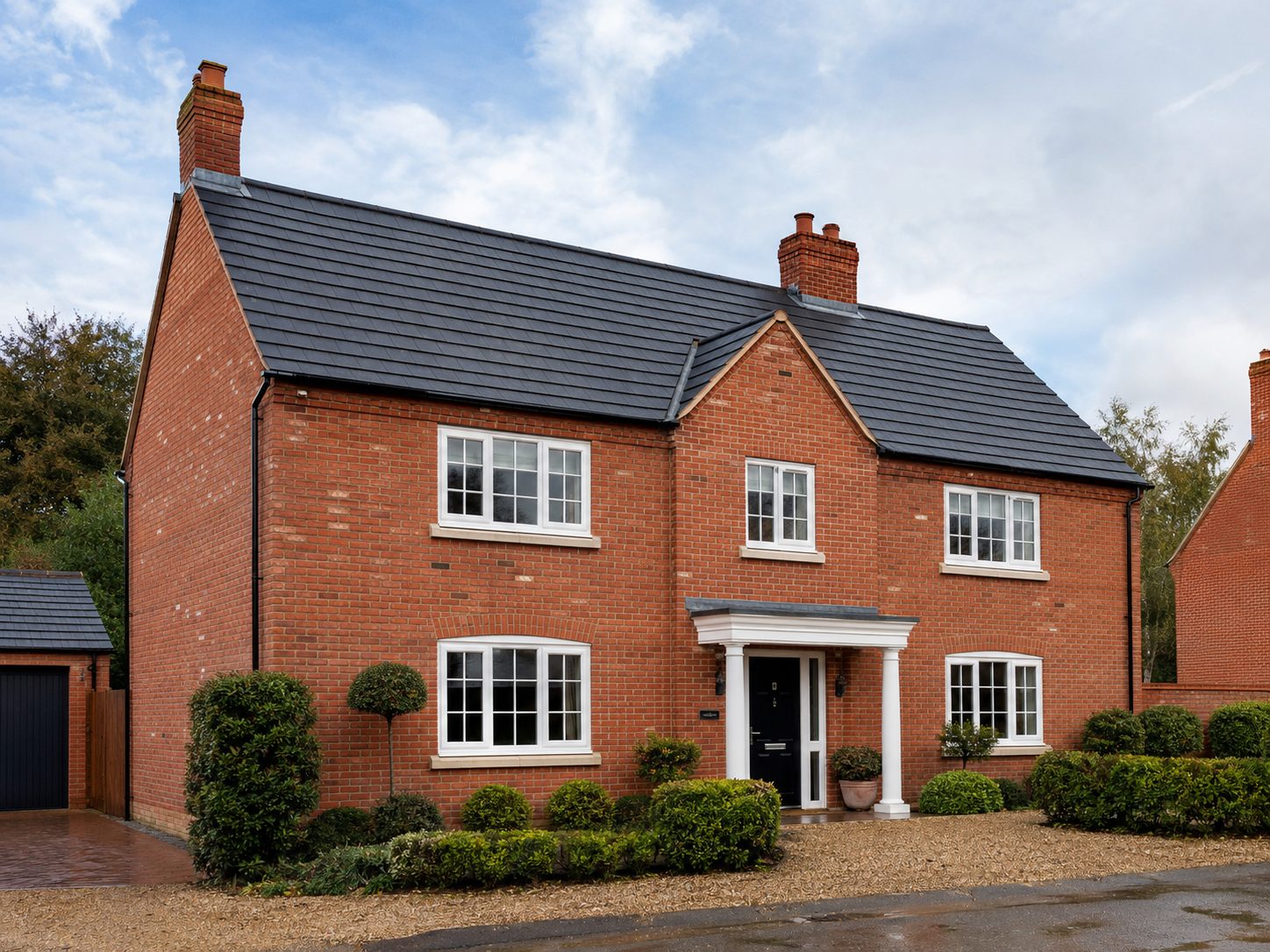
We are not solar installers, and this page is not about which panels to buy. It is about the roof underneath them, because that is where we get called. Panels are fixed through the covering into the rafters and are expected to stay there for decades, so the condition of the roof at the moment of installation matters enormously. Getting the order of work wrong is one of the more expensive mistakes available to a homeowner.
Need this sorted?
Roof Repairs & Leaks from Larke's Roofs.
Do the roof first
This is the single most important point on the page. Solar panels are expected to work for a long time. If the roof underneath has only a few years left, you will be paying to remove the array, store it, replace the covering and refit it, which is a substantial avoidable cost on top of the re-roof itself.
So the sequence is: assess the roof, replace it if it needs replacing, then install the panels. If the covering is sound and has plenty of life left, go ahead. If it is patchy, if the underlay is perished or if the mortar is failing, do that work while the roof is clear.
It is worth having the roof assessed independently rather than relying on a visual glance during a solar sales visit, because the two parties are answering different questions.
How panels are actually fixed
On a standard retrofit installation, roof hooks or brackets are bolted through the covering into the rafters, and rails are then fixed to those brackets with the panels clamped to the rails. The load path goes into the roof structure, not into the tiles.
That means two things for the roof. First, the rafters need to be sound and to be located accurately, because a bracket screwed into a batten or into the edge of a rafter is not carrying anything reliably in a gale. Second, every bracket is a penetration through the weatherproof layer, and each one has to be weathered properly.
Good practice weathers the bracket with a replacement flashing tile or a purpose made lead or proprietary detail. Poor practice cuts a notch in a tile and relies on sealant. Sealant will not last the life of the panels.
- Brackets fixed into rafters, not battens or tiles
- Each penetration weathered with a proper flashing detail
- Cut or notched tiles replaced rather than reused
- Cable entry into the loft sealed and weathered, not just drilled
Roof Repairs & Leaks
- Leak tracing and repair
- Slipped and broken tiles
- Storm damage repairs
In-roof versus on-roof
On-roof, or above-roof, mounting is the standard retrofit: panels stand off above the existing covering on rails. It is quicker, cheaper and reversible, and the air gap behind the panels helps them run cooler.
In-roof systems replace an area of covering with the panels themselves, set into a proprietary tray and flashed in like a large rooflight. They look considerably neater, which matters on prominent elevations and in some conservation contexts, and they are the obvious choice on a new build or as part of a full re-roof.
The trade off is that an in-roof array becomes part of the weatherproof envelope, so the flashing detail around it has to be right, and repairs underneath are more involved.
Living with panels on the roof
There are a few practical consequences owners are not always told about. Access to the slope for maintenance is restricted, so anything under the array is difficult to reach afterwards. Debris collects at the lower edge of panels and in the gutter below. Birds nest in the gap under panels unless mesh is fitted, and that is a nuisance to resolve later.
Panels also change the wind behaviour of the slope slightly and add weight, which is fine on a sound modern roof and is worth an assessment on an older or altered one.
None of these are reasons not to fit solar. They are reasons to sort out the covering, the gutters and the bird protection at the same time rather than afterwards.
If you already have panels and need roof work
Where a leak is traced to a bracket penetration or a cut tile, the repair often needs the local panels temporarily removed, which is work for the solar installer rather than for us, both for the electrical isolation and for the warranty on the array.
For a full re-roof under an existing array, the panels come off, the roof is stripped and rebuilt, and the panels are refitted, ideally with new flashing details at every bracket. It is worth coordinating the two trades and agreeing the sequence in advance so nobody is waiting on scaffold.
We are happy to work alongside a solar installer and will set out clearly in a quotation what is roofing work and what needs to be handled by them.
Want a professional to handle it?
Common questions
Will solar panels damage my roof?
A competently installed array on a sound roof should not. Damage comes from brackets fixed into the wrong timber, penetrations weathered with sealant instead of proper flashings, and installation onto a covering that was already at the end of its life.
My roof leaks near the panels. Who fixes it?
We can inspect and identify the cause, and if the fault is at a bracket or a cut tile, the panels usually need isolating and lifting by the solar installer before the roofing repair is made. It is worth involving both parties early rather than in sequence.
Should I re-roof before installing solar?
If the covering is anywhere near the end of its life, yes. Removing and refitting an array later costs far more than doing the roof first, and a re-roof also lets you consider an in-roof system that looks considerably better.
Can panels be fitted to any roof?
No. Orientation, pitch, shading, rafter condition and covering type all matter, and some coverings such as fragile older slate or profiled sheet need particular care. Have the roof assessed as part of the feasibility rather than after the contract is signed.
Related services
Covering Norwich and Norfolk.