
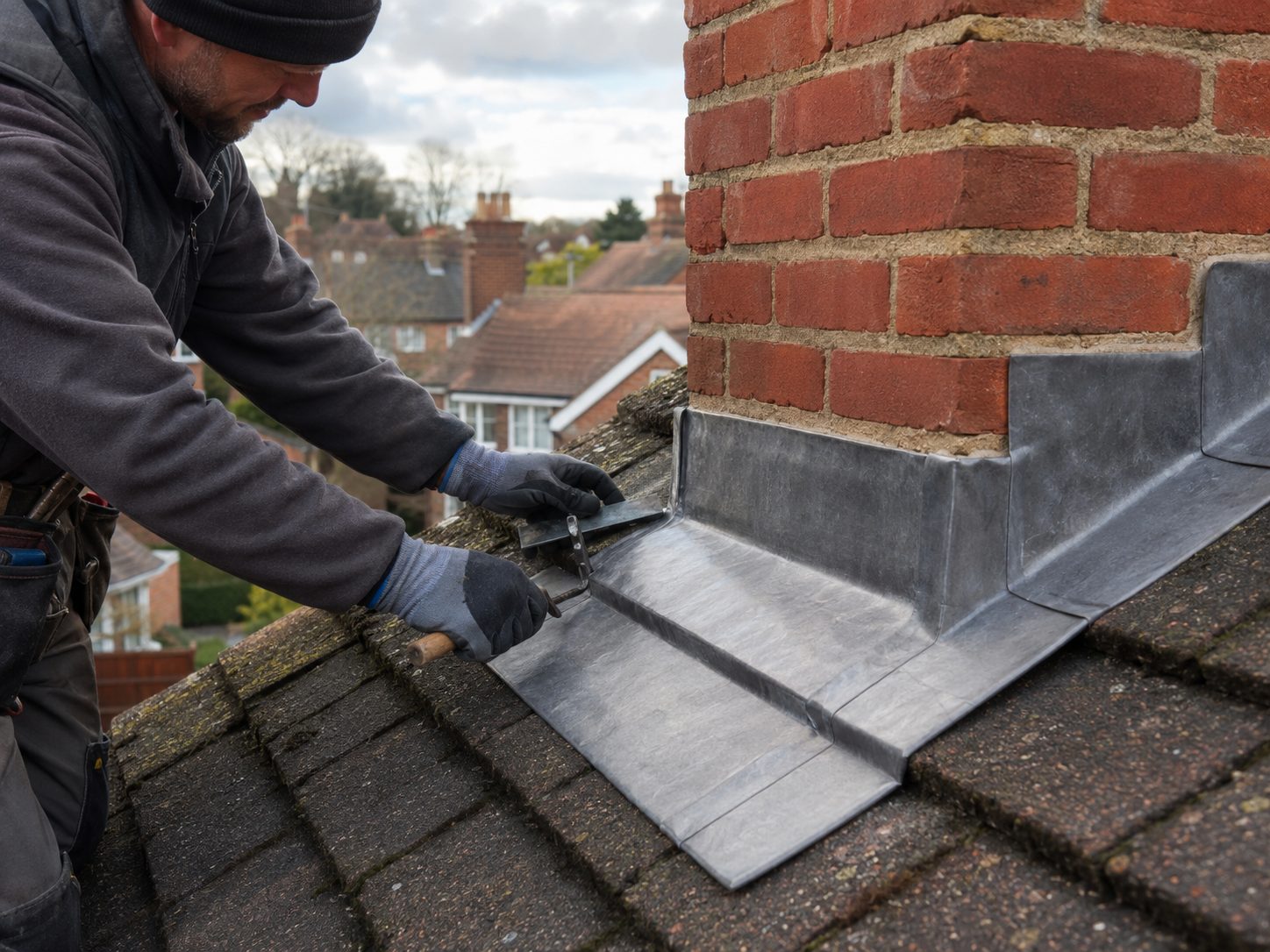
Lead does the jobs a tile cannot. Wherever a roof meets a wall, a chimney, a dormer or another slope, something has to make that junction watertight while both sides move independently for decades. Lead can be dressed to almost any shape, it lasts a very long time, and it can be re-dressed rather than replaced, which is why it is still the standard after centuries.
Codes and lengths
Lead is graded by code, the higher the number the thicker the sheet. Using too thin a code on an exposed detail is a false economy because it fatigues and splits sooner. Equally important, and more often ignored, is length: lead expands and contracts significantly with temperature, so each piece has a maximum recommended length. Run a valley or a cover flashing in one long piece and it will crack in a straight line, usually within a few years.
The details that matter
Most roofs need a handful of lead details, and each has a right way of being formed.
- Stepped cover flashings chased into mortar joints and wedged
- Soakers interleaved with slates or plain tiles at an abutment
- Front aprons and back gutters at chimney stacks
- Valley linings with correct laps, clips and welts
- Dormer cheeks, tops and pitched-to-flat junctions
- Bay roofs, porch canopies and parapet gutters
Why mortar fillets keep coming back
A cement fillet is faster and cheaper than lead and it is the single most common cause of abutment leaks we attend. Mortar cannot accommodate movement, so it cracks, and once cracked it holds water at the joint instead of shedding it. Replacing a fillet with correctly cut-in lead is one of the highest-value repairs available on an older roof.
Repair, re-dress or renew
Lead often does not need replacing. Flashings that have lifted out of the joint can be re-wedged and repointed; lead that has been disturbed can be re-dressed. Where it has split from fatigue, that section needs renewing in correct lengths, patching a fatigue crack with mastic just delays the same failure a metre along.
Common questions
How long does lead last?
Correctly specified and installed leadwork is measured in decades. Almost all premature failures come from over-long lengths, thin codes or fixing methods that stop the lead moving.
Are lead alternatives any good?
Modern flashing alternatives suit some situations well, particularly where theft is a genuine risk or where a detail is simple. For complex dressed work on period buildings, lead is still the material we would specify.
Can lead be patched?
Lifted and displaced lead can be re-dressed and re-fixed. Fatigue splits need the affected section renewing at the correct length, otherwise the crack simply reappears.
Is a mortar fillet ever acceptable?
There are traditional details on some historic buildings where it is appropriate, but as a substitute for a cut-in lead flashing on an ordinary roof, no.