
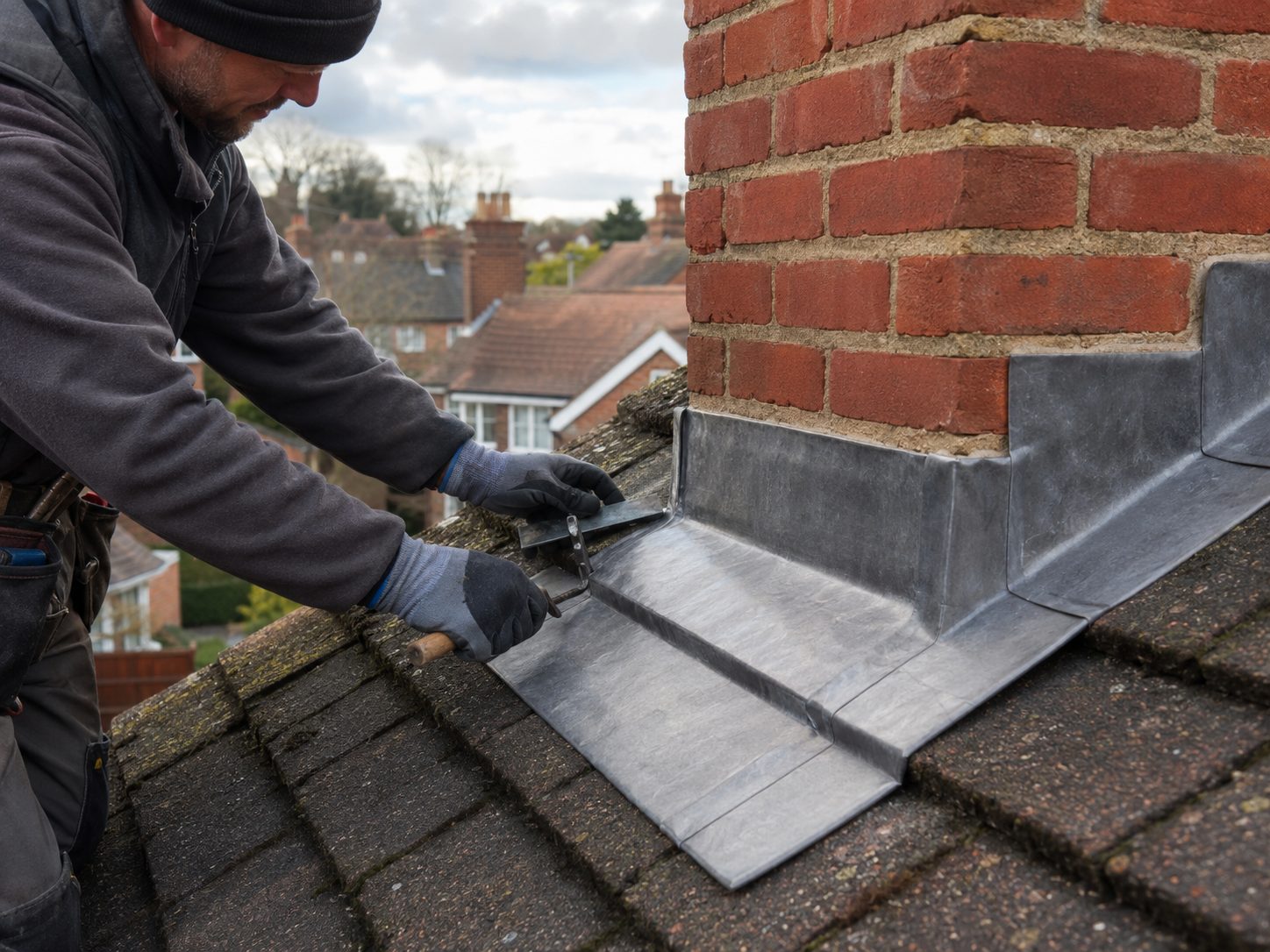
A dormer takes a simple roof slope and adds a small flat roof, two vertical cheeks, four external corners, two internal junctions with the main roof, a window, and a set of flashings tying it all together. Every one of those is a place water can get in, which is why dormers produce a disproportionate share of leaks on otherwise sound roofs. Finding the entry point on a dormer is genuinely harder than on a plain slope, and it is the reason a proper inspection matters more here than almost anywhere else on a house.
Need this sorted?
Roof Repairs & Leaks from Larke's Roofs.
Why dormers leak more than the roof around them
Three reasons. First, a dormer is mostly detail and hardly any plain area, and details are where roofs fail. Second, many dormers were formed as an afterthought during a conversion, sometimes by a builder rather than a roofer, and the flashing sequence was made up as it went along. Third, the structure is small and lightly built, so it moves more than the main roof, and rigid materials or over long lead sheets crack where that movement concentrates.
It also hides the evidence. Water that gets into a dormer cheek runs down inside the timber structure and appears at the bottom, or inside a ceiling several feet away, so the stain almost never marks the entry point.
The cheek to roof junction
Where the vertical side of the dormer meets the sloping roof, the covering has to be dressed up the cheek and the cheek covering has to lap over it. On a well built dormer this is done with individual lead soakers behind each tile or slate, plus a cover flashing or a secret gutter, so each course is protected separately.
Where it has been done with a single strip of lead, or with mortar, or with mastic, it fails. Mortar cracks at the first frost, mastic lets go within a few years of ultraviolet exposure, and a continuous strip of lead expands and contracts along its length until it splits at the fixings.
- Cracks running along a lead flashing at regular intervals: sheets too long
- Mortar fillet crumbling at the cheek line: never a durable detail
- Slates cut short of the cheek so the soaker is exposed
- Cover flashing not chased or clipped, lifting in wind
Roof Repairs & Leaks
- Leak tracing and repair
- Slipped and broken tiles
- Storm damage repairs
The flat top
Most dormers have a small flat roof, often the size of a table, and small flat roofs are unforgiving. There is little room for fall, the outlet is usually tiny, and the upstand at the back where it meets the main roof carries all the water coming down the slope above.
The failures are predictable: a shallow upstand, an outlet blocked with moss, a covering that has been folded around a corner rather than cut and welded, and lead that has cracked from thermal movement because it was laid in sheets longer than lead should be. Cracked lead on a dormer top is one of the most common single causes of a bedroom stain in a converted loft.
The window and the cheek cladding
Dormer windows sit in a small vertical wall, and the head and sill details matter. A missing head flashing above the window lets water tracking down the cheek run straight in behind the frame. A sill without a proper drip throws water back at the wall below rather than clear of it.
Cheek claddings vary widely. Tile hung and slate hung cheeks are durable if the battens and underlay behind them are right. Lead and zinc cheeks last a long time when the sheet sizes are correct. Rendered and boarded cheeks are the ones that tend to age badly, because they rely on paint or a coating to keep water out and there is nothing behind them when it fails.
What you can do before we arrive
Note when the water appears, and whether wind direction affects it, because on a dormer that is a genuine diagnostic clue. Photograph the stain when it is fresh. If a ceiling is bulging, pierce it deliberately with a container underneath rather than waiting for it to fall.
From a window or from the garden with binoculars, look for the obvious: a cracked lead flashing, a missing tile beside the cheek, plants growing in the little flat roof outlet, a mortar fillet that has fallen away. It saves time and it is entirely safe.
Do not climb onto a dormer top. They are small, often lightly framed, and standing on a lead or felt dormer roof is how the covering gets damaged in the first place. If water is coming in heavily we do offer 24 hour emergency call out on 07437 005301.
How a dormer is repaired properly
The honest answer is that dormer leaks are found by opening things up. We strip back the covering around the suspected area, look at the underlay and the flashing sequence beneath, and rebuild the detail in the correct order with correctly sized lead, proper laps and mechanical fixings rather than mortar and sealant.
Leadwork is a large part of it, and lead is unforgiving of shortcuts. Sheet lengths, code thickness, clipping, and allowance for expansion all decide whether a repair lasts twenty years or two winters.
Because a dormer holds several details close together, we normally quote for putting the whole set right rather than one flashing, and explain in writing what is being renewed and why. The inspection itself is free.
Want it looked at? See our flat roof repairs and replacement across Norfolk.
Want a professional to handle it?
Common questions
Why can't the roofer just tell me where the dormer is leaking from the ground?
Because water entering a dormer runs inside the structure before it appears indoors, so the stain rarely lines up with the fault. Some dormer leaks are only confirmed once the covering is stripped back around the suspected detail.
Is mortar along the dormer cheek acceptable?
It is common on older work but it is not a durable detail. Mortar fillets crack as the dormer and the roof move at different rates, and once cracked they hold water against the junction. Lead soakers and a cover flashing are the proper answer.
Why does my dormer only leak in certain winds?
Driving rain gets under laps and behind flashings that shed vertical rain without difficulty. A leak that only appears with wind from one direction usually points to the flashing on that side of the dormer.
Can a dormer flat roof be recovered on its own?
Yes, and it is often worth doing while the flashings are exposed. Small dormer tops are quick to recover and it makes sense to renew the covering and the upstand detail at the same time rather than in two visits.
Do you carry out leadwork yourselves?
Yes. Leadwork is one of the services we offer, and dormer flashings, valleys and cheeks are typical examples of it.
Related services
Covering Norwich and Norfolk.